In Message of the Land, the old couple’s desire to pass their land to their children stems from deep-rooted emotional, practical, and cultural motivations that reflect the profound significance of land in rural life. For them, the land is far more than a piece of property—it is the carrier of family heritage, a source of livelihood, and a symbol of intergenerational love, making its inheritance a sacred and necessary responsibility.
Firstly, the land represents family legacy and identity. The couple has spent their entire lives tilling the soil, pouring their sweat, memories, and labor into every furrow. Each harvest, each season’s cycle, and each hardship overcome on the land have become part of their family’s story. By passing the land to their children, they aim to preserve this collective memory: it is a way to tell their children where they come from, what their ancestors endured, and what values they should uphold. The land becomes a tangible link between the past, present, and future, ensuring that the family’s history and traditions are not lost to time.
Secondly, the land is a practical guarantee of survival and stability. In rural contexts depicted in the article, land is the foundation of livelihood. It provides food, income, and a sense of security that no other asset can match. The old couple, having experienced the uncertainties of life, understand that the land will continue to sustain their children in times of hardship. They know that in an ever-changing world, the land remains a reliable anchor—one that can feed their family, support their lives, and offer a refuge if other endeavors fail. Passing on the land is thus an act of practical love, ensuring their children’s basic well-being and future security.
Finally, the land embodies intergenerational affection and responsibility. For the old couple, the land is a gift forged by their life’s work, and giving it to their children is the ultimate expression of their love. It is not just about transferring property, but about entrusting their hopes and aspirations. They believe that the land will teach their children the same virtues of hard work, perseverance, and respect for nature that shaped their own lives. In turn, they hope their children will continue to cherish and nurture the land, passing it on to the next generation, thus completing the cycle of familial and cultural continuity.
In short, the old couple’s decision to pass on the land is driven by their desire to preserve their family’s legacy, ensure their children’s livelihood, and convey their enduring love. It is a choice that reflects the timeless bond between people and the land, and the profound sense of responsibility that comes with being stewards of both family and nature.
I think there are three reasons. First, the couple have deep affection for the land, where they have entrusted their memories and love. Second, it gives them a sense of belonging—they were born on this land and will rest here. Third, they wish to pass it down as it is their family tradition.
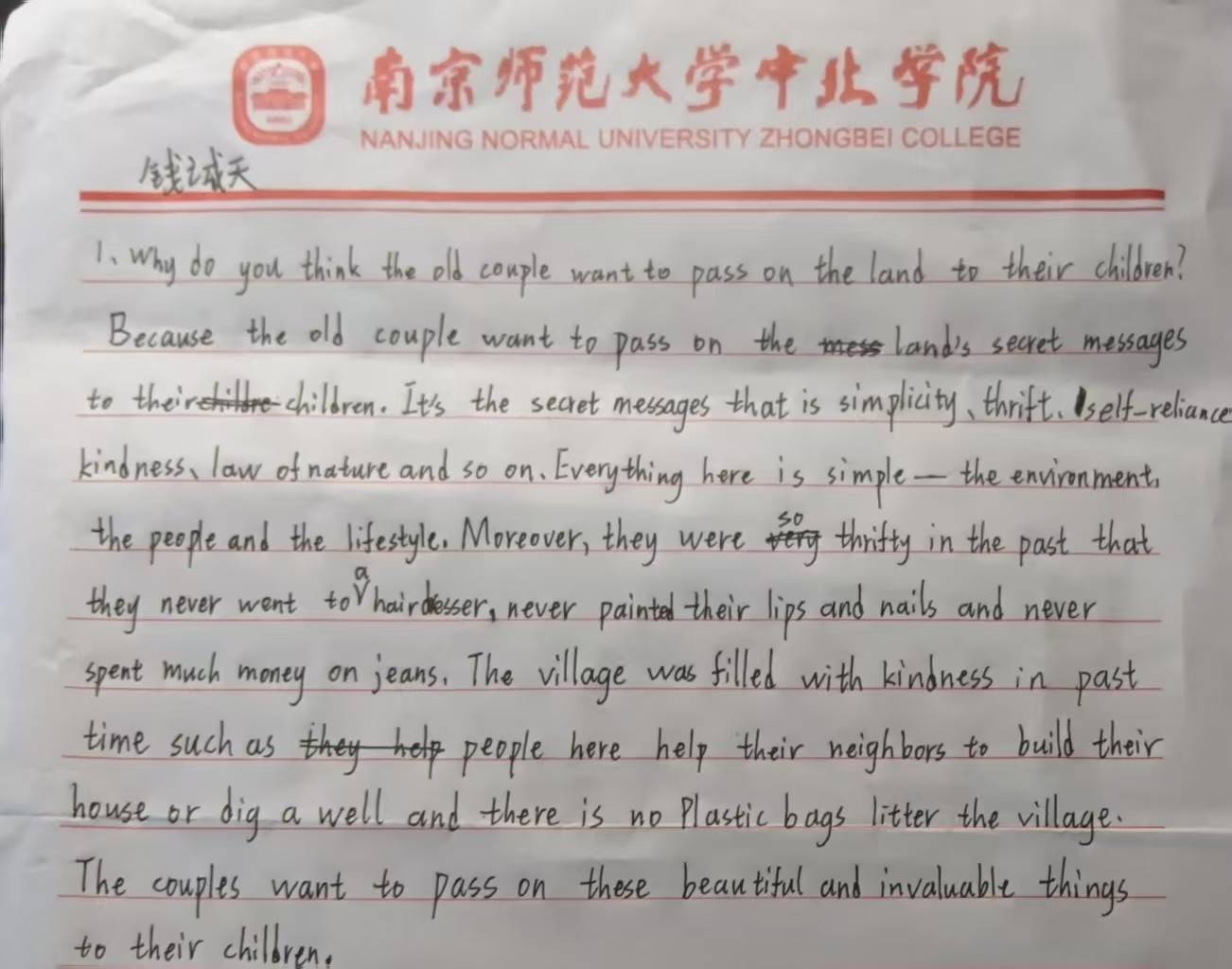
In my opinion there are three reasons why the old couple want to pass on the land to their chindren.First of all,the land represents the development of the family.It witnessed the growth of this family from generation to generation.This the old couple wanted to preserve and protect the piece of land which implies the history and heritage of the family.Second,the old couple without children by their side was lonely.If they can pass on the land to their chindren,it means thier children can come back and company them.Third,such an idea is a manifestation of the love for the land by the older generation,and also a protection of traditional culture.
First of all, this land has a long history. It is a symbol of the life of their ancestors for generations and also carries the memories of them and their children.
Moreover, the old couple have a deep affection for this land. They work hard on the land from morning till night and endure diseases, pains and hardships. They hope that their children can also love this land as they do.
Finally, for them, the land symbolizes continuity, and they hope that their spirit can continue through the efforts of future generations.
Here’s the extended version of the first point, along with the 1. Cultural & generational continuity
The land has been a cherished part of the family for more than three centuries, serving as a living link to their ancestors who tilled, nurtured, and relied on it across countless generations. For the old couple, allowing this land to be lost during their time would mean breaking a sacred, unbroken chain of heritage—one that has sustained their family’s livelihood, traditions, and sense of belonging for hundreds of years. They view safeguarding and passing it on as a duty to honor the efforts and legacy of those who came before them.
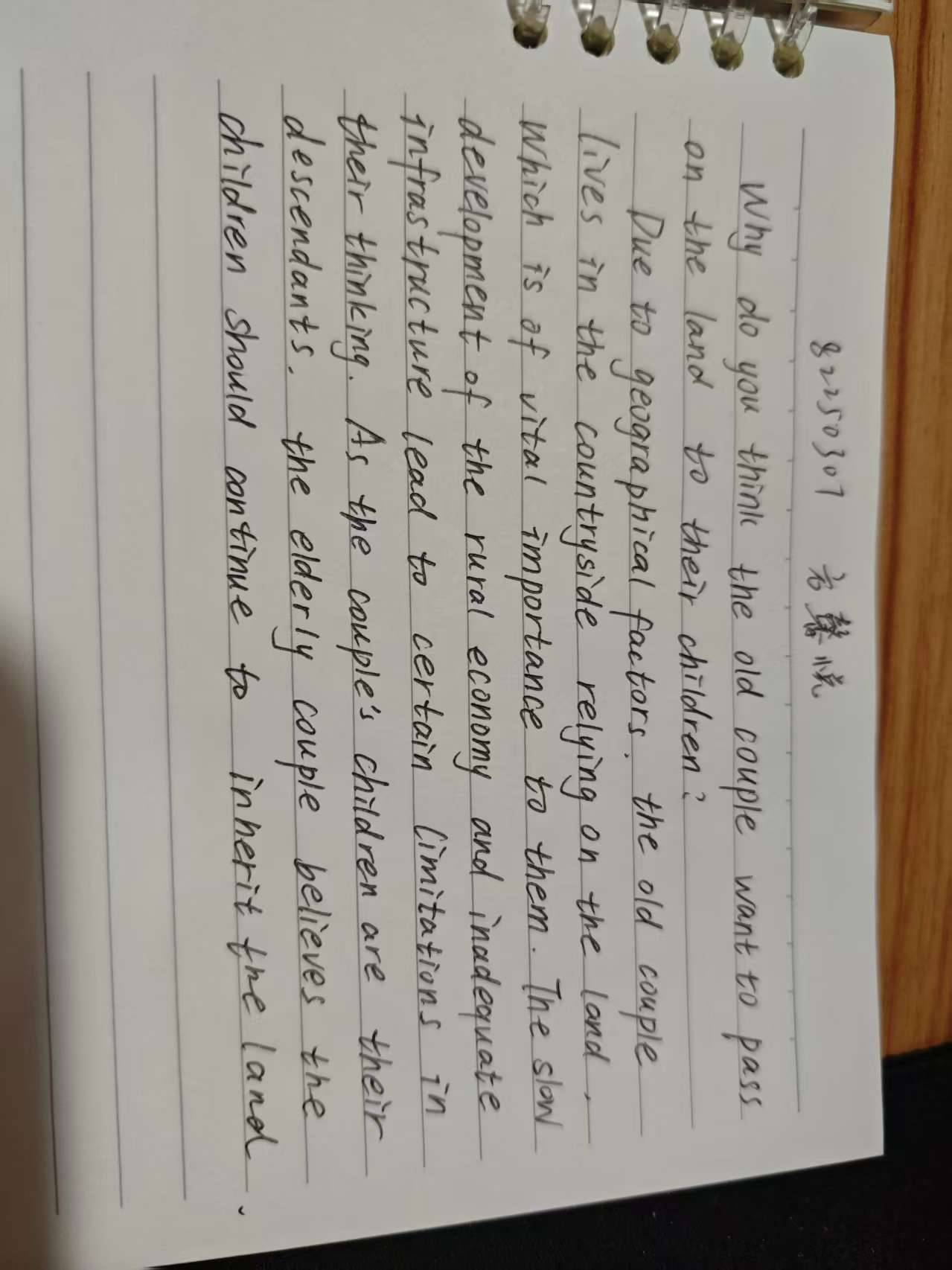
From the perspective of the old woman, the changes in the countryside hurt her heart, and the land is gradually not valued. She hopes that the land can be inherited by her children, and she is also deeply influenced by traditional concepts and morality that the land should be passed down from generation to generation. As for the husband, he also hopes that the land can be passed down. He is also deeply influenced by tradition, and the land can be passed down from generation to generation like the old woman.
Because from the perspective of the old woman, the changes in the countryside hurt her heart, and the land is gradually not valued. She hopes that the land can be inherited by her children, and she is also deeply influenced by traditional concepts and morality that the land should be passed down from generation to generation. As for the husband, he also hopes that the land can be passed down. He is also deeply influenced by tradition, and the land can be passed down from generation to generation like the old woman.
Because from the perspective of the old woman, the changes in the countryside hurt her heart, and the land is gradually not valued. She hopes that the land can be inherited by her children, and she is also deeply influenced by traditional concepts and morality that the land should be passed down from generation to generation. As for the husband, he also hopes that the land can be passed down. He is also deeply influenced by tradition, and the land can be passed down from generation to generation like the old woman.
The old couple wants to pass on the land to their children for several important reasons:
1. Heritage and Legacy: The land represents their family's history and continuity, having been passed down through generations. They feel a deep responsibility to preserve this legacy and not let it end with them.
2. Cultural and Emotional Value: The land holds memories, traditions, and the family's identity. It is a tangible connection to their ancestors and their way of life, which they hope their children will cherish.
3. Practical Livelihood: The land has sustained the family for generations. By passing it on, they wish to provide their children with security, purpose, and a means of living in harmony with nature.
4. Resistance to Modern Disconnection: In a changing world, the couple sees the land as an anchor against rootlessness and materialism. They hope it will keep their children grounded and connected to their origins, even if they pursue different paths.
I think the old couple wants to pass the land on to their children for a deeply emotional reason, seeing it as the living heart of their family's heritage rather than just a piece of property. The land holds generations of memories and represents their entire identity; it's where their children grew up, and the farmer feels a profound connection to every inch of it. They hope that by passing it on, one of their children will return from the city, continuing the family's legacy and the traditional way of life that they cherish. Ultimately, they want to entrust their children not just with the soil itself, but with the values, history, and secret wisdom that the land holds.
In the story “Message of the Land,” the old couple wants to pass on the land to their children because the land is deeply connected to their life, memories, and family roots. It represents their hard work, their history, and their identity. Even though their children have moved away to the city, the couple still hopes that one day the children will return and remember where they came from. By leaving the land to them, the parents are not just giving them a piece of soil—they are passing on a sense of belonging, their values, and a hope that the family’s story and connection to the land will continue into the future.















 您确定给 “