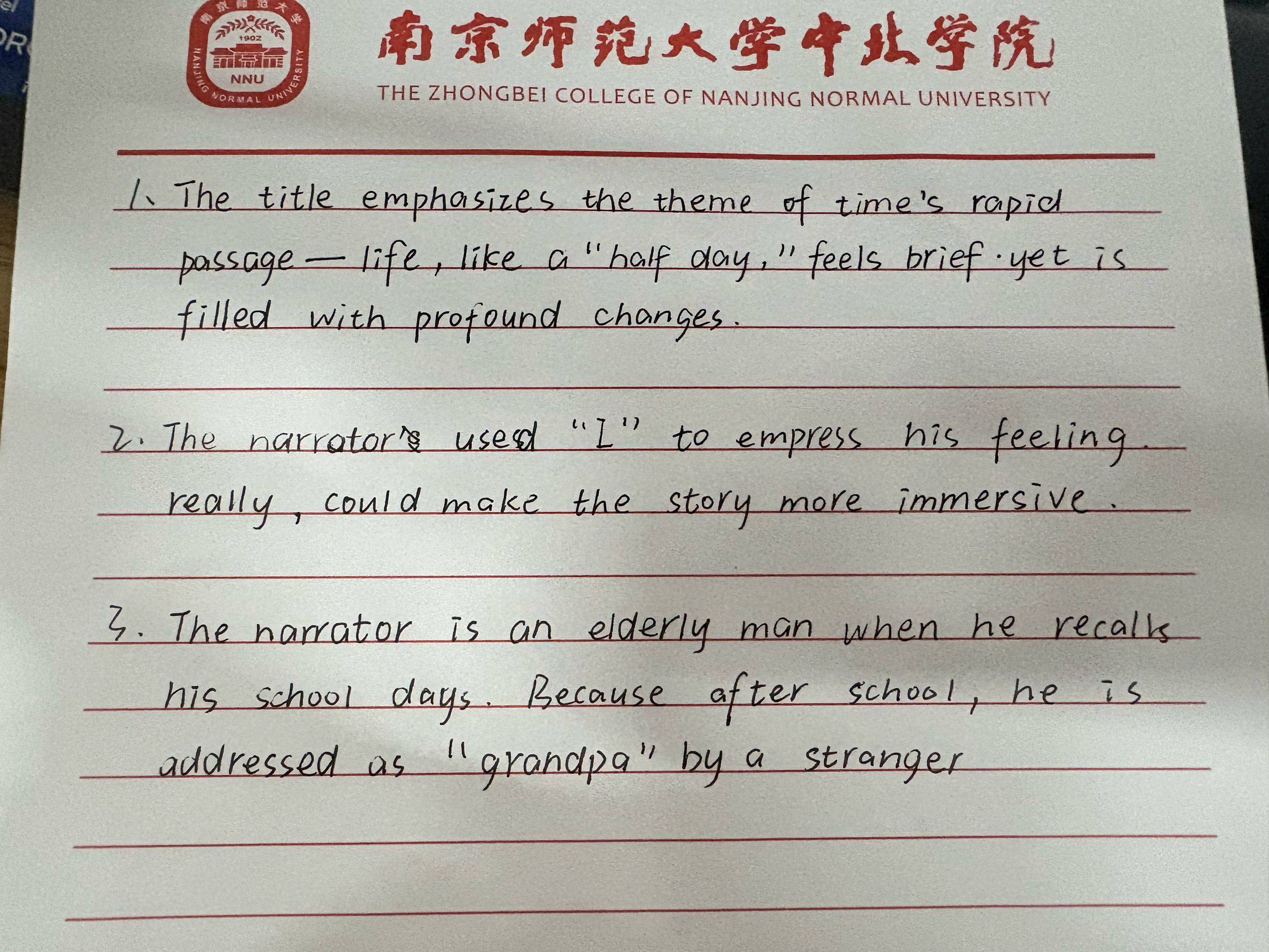
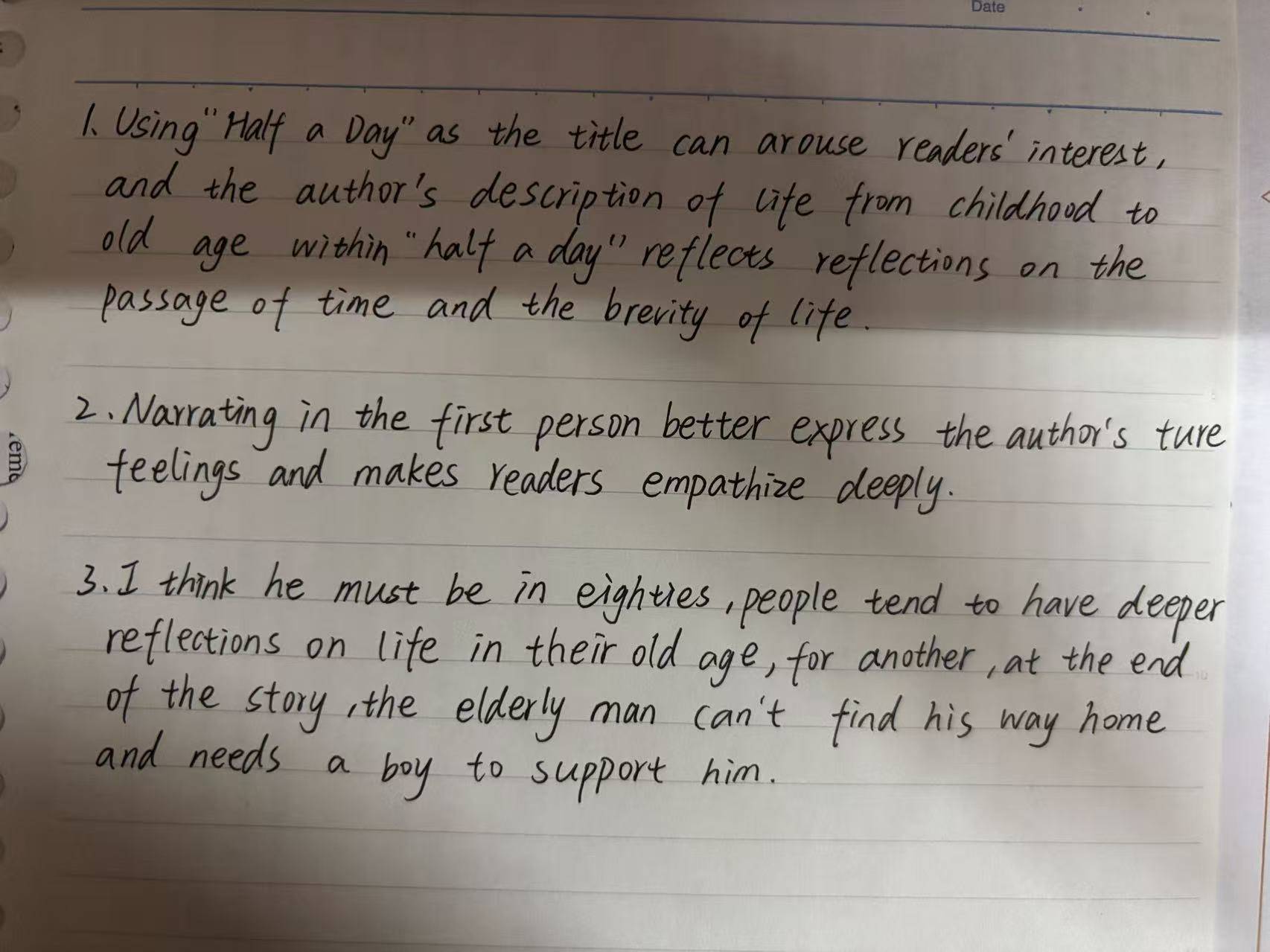
1."Half a day" implies that time passes quickly, which fits the content of the novel.
2.It enhances the sense of immersion and resonates with readers.
3.He is probably in his seventies.The novel mentions at the end that the narrator needs help from a little boy to cross the road
1."Half a day" implies that time passes quickly, which fits the content of the novel.
2.It enhances the sense of immersion and resonates with readers.
3.He is probably in his seventies.The novel mentions at the end that the narrator needs help from a little boy to cross the road
1.On the surface, it depicts the author's half-day study life,on a deeper level, it conveys that time like an arrow and passes by in a short time
2.It has a strong sense of immersion and tell the story from a child's perspective, making it more vivid and interesting.
3.He is probably in his twilight years, around 75 years old, because a child called him "grandpa" later in the story.
1"Half a Day" is a metaphor for a whole lifetime. The narrator thinks school will take just half a day, but when he exits, the world is unrecognizable—showing how life’s decades feel fleeting, like a short span.
2. It lets readers share the narrator’s confusion and emotion (e.g., his fear of leaving his mom, shock at the changed world) and hides the time "twist" until the end, making the theme of time’s impermanence hit harder.
3. He’s elderly. After "half a day" at school, a young boy helps him cross the road, and he can’t recognize the world—clear signs of old age, plus his hindsight about life’s brevity.
1. As far as I am concerned, the timeline about the story is literally “half a day”. Moreover, the title itself can grab the readers’ attention and interest about what it means among the context.
2. The first person’s view can make a sense of folksy surroundings, which you read as if you are really going through it.
3. It goes without saying that the author must be the elderly who wrote the play to recall his childhood life like The Morning Flowers Picked at Dusk
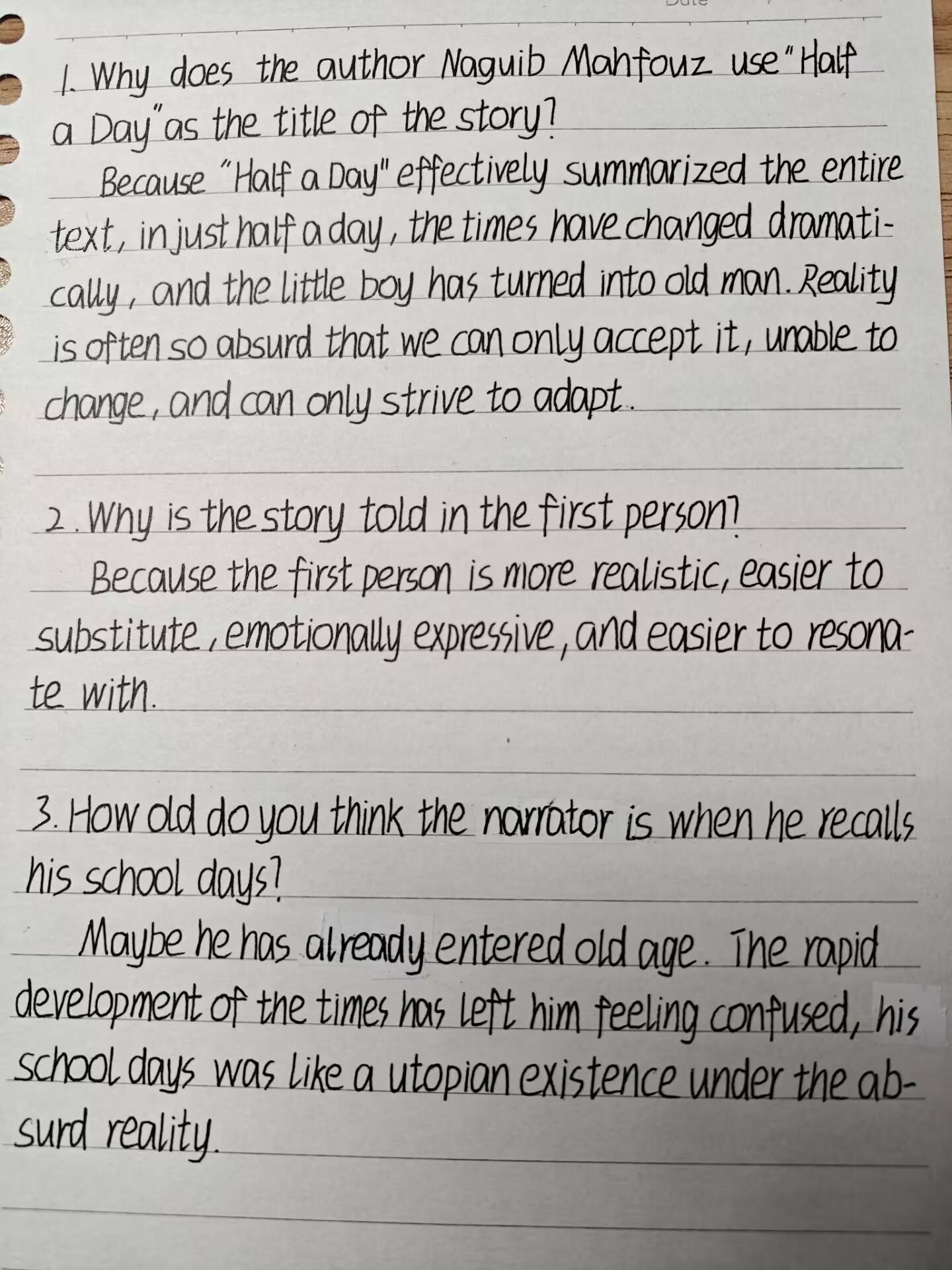
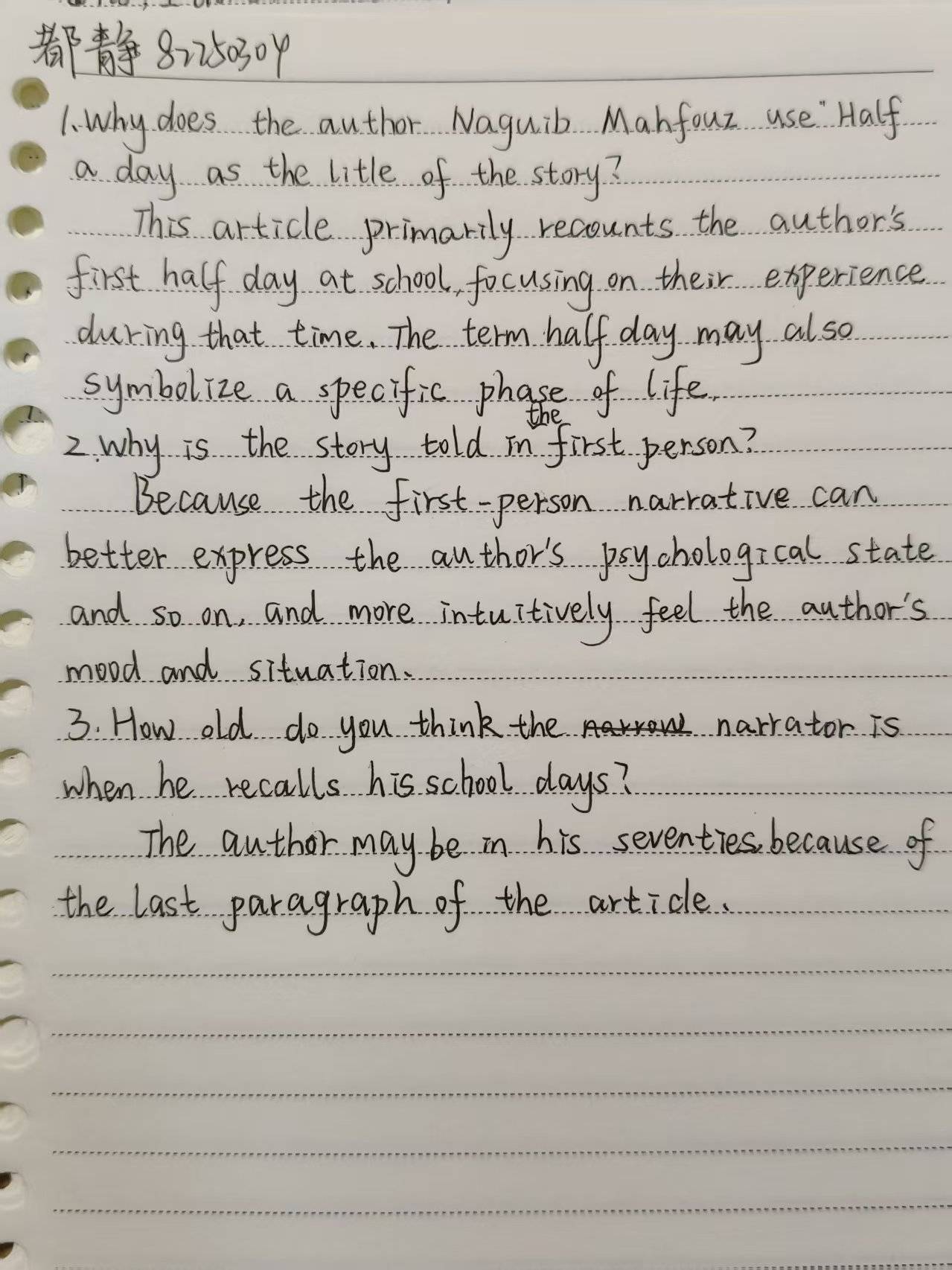
1.Why does the author Naguib Mahfouz use half a day as the title of the story?
Naguib Mahfouz uses "Half a Day" as the title to symbolize how life, from childhood to old age, feels fleeting and compressed, much like a single day that encompasses an entire lifetime, highlighting themes of time’s illusion, life’s brevity, and the cycle of existence.
2. Why is the story told in the first person?
To create a sense of intimacy and authenticity, allowing readers to directly experience the narrator’s emotions, memories, and reflections on time and life, making the themes more relatable.
3. How old do you think the narrator is when he recalls his school days?
He is very old, likely an elderly man. The story describes him growing from a child to an adult, experiencing marriage, career, and aging, and finally realizing his entire life passed like “half a day”, indicating he is recalling from a late stage of life.
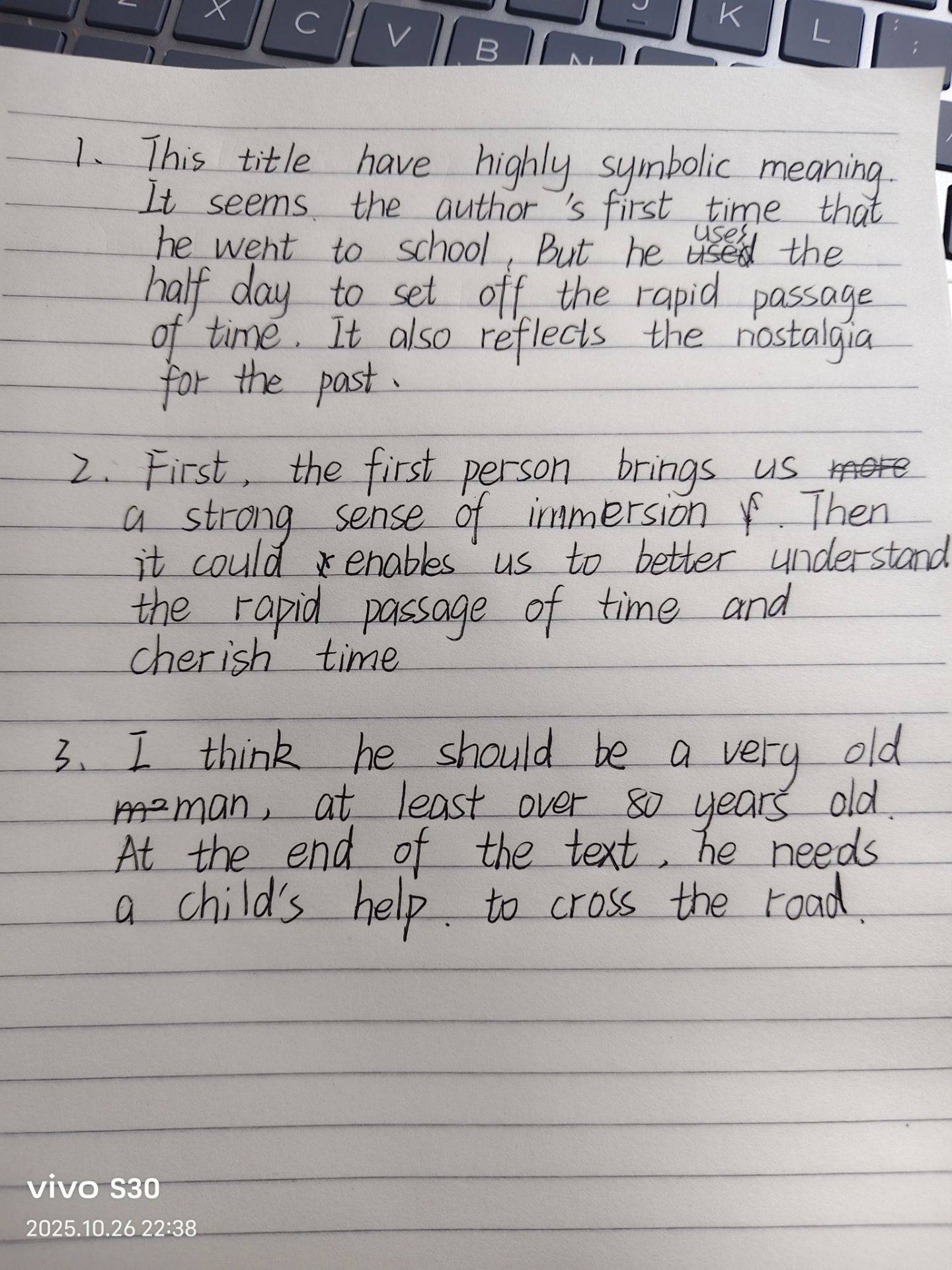
1.The title "Half a Day" refers to the author's recollection of the first day of school, which holds great significance for him as it was his first time entering school and experiencing the beauty and challenges of school life for the first time. The title also implies the author's profound memory of this experience and nostalgia for school life.
2.The story is narrated in the first person, allowing readers to more directly feel the author's emotions and experiences. This narrative style makes the story more authentic and relatable to the readers, allowing them to better understand the author's feelings and thoughts.
3.When the author recalls their school life, they are already an adult. From his memories of school life and his feelings about the changes in school, it seems that he may already be a middle-aged or elderly person. At this age, authors' memories of school life are often filled with nostalgia for the past and nostalgia for the present.
1.This title is the key to understanding the allegory of the entire story, employing a symbolic approach. On the surface, it refers to a little boy's first morning at school. But its deeper meaning is that this "half-day" symbolizes a person's entire life. The narrator feels that "several centuries have passed", not just a few hours. This implies that in a busy and fulfilling life, time seems to fly by subjectively. By compressing a lifetime's experience into a morning's events, it profoundly reveals the themes of the brevity of life, the swift passage of time, and the dramatic changes in society.
2. The use of the first person is to enhance the emotional impact and universal resonance of the story, allowing readers to more easily empathize with the character's experiences. By viewing the world through a child's eyes, the description becomes more direct and emotional, thereby intensifying the sense of personal experience. Although the story is about "me", my name is never mentioned. This makes "me" a representative of everyone. The reader's perception shifts from "This is his story" to "This will be/ is my story", thus more profoundly grasping the implication that "life is like morning dew".
3. I think the narrator is an old man when he is recalling. At the end, it is written that he stands at the school gate, finding that the familiar way home has vanished, surrounded by "racing cars", "skyscrapers" and "noise". He feels confused and needs to "wait for a long time" to cross the road. This depicts an image of an old man who is out of touch with society and moves slowly. He uses the review of his "half-day" experience at school to metaphorically summarize his fleeting yet long life.
The title "Half a Day" symbolizes the protagonist’s entire life, compressed into a single morning. The first-person narrative allows readers to experience his emotions and emphasizes the story’s twist: what felt like half a day actually represents his journey from childhood to old age. By the end, he is elderly and reflecting on how quickly life has passed, reinforcing the theme of time’s fleeting nature.
1.“Half a Day”not only describes the time the prtagonist spends at school,but alo expresses the speed of the passage
of time, highlghting the passage of lfe.
2.Make the story more immersive ,let readers be more immersed in the plot ,better feel the joys and sorrows of the pntagonist , and make the story develop more natural.
3.I think he is about 60-80 years old.Because he has described most of his life in the article,he should be relatively old and have enugh time to recall his life.
1. Why does the author use “Half a Day” as the title?
The story only describes the boy’s first half day at school, but in that short time, he experiences many changes and learns about life. By the end, he feels like much more time has passed. The title shows how a small part of life can feel like a whole lifetime.
2. Why is the story told in the first person?
Using first person (“I”) helps readers feel what the boy feels—his fear, curiosity, and surprise. It makes the story more personal and lets us see how he grows up quickly in just half a day.
3. How old do you think the narrator is when he recalls his school days?
He is probably very old. At the end of the story, when he leaves school, everything outside has changed: the streets, cars, and buildings are different. This shows that many years have passed since his first day at school.

















 您确定给 “