













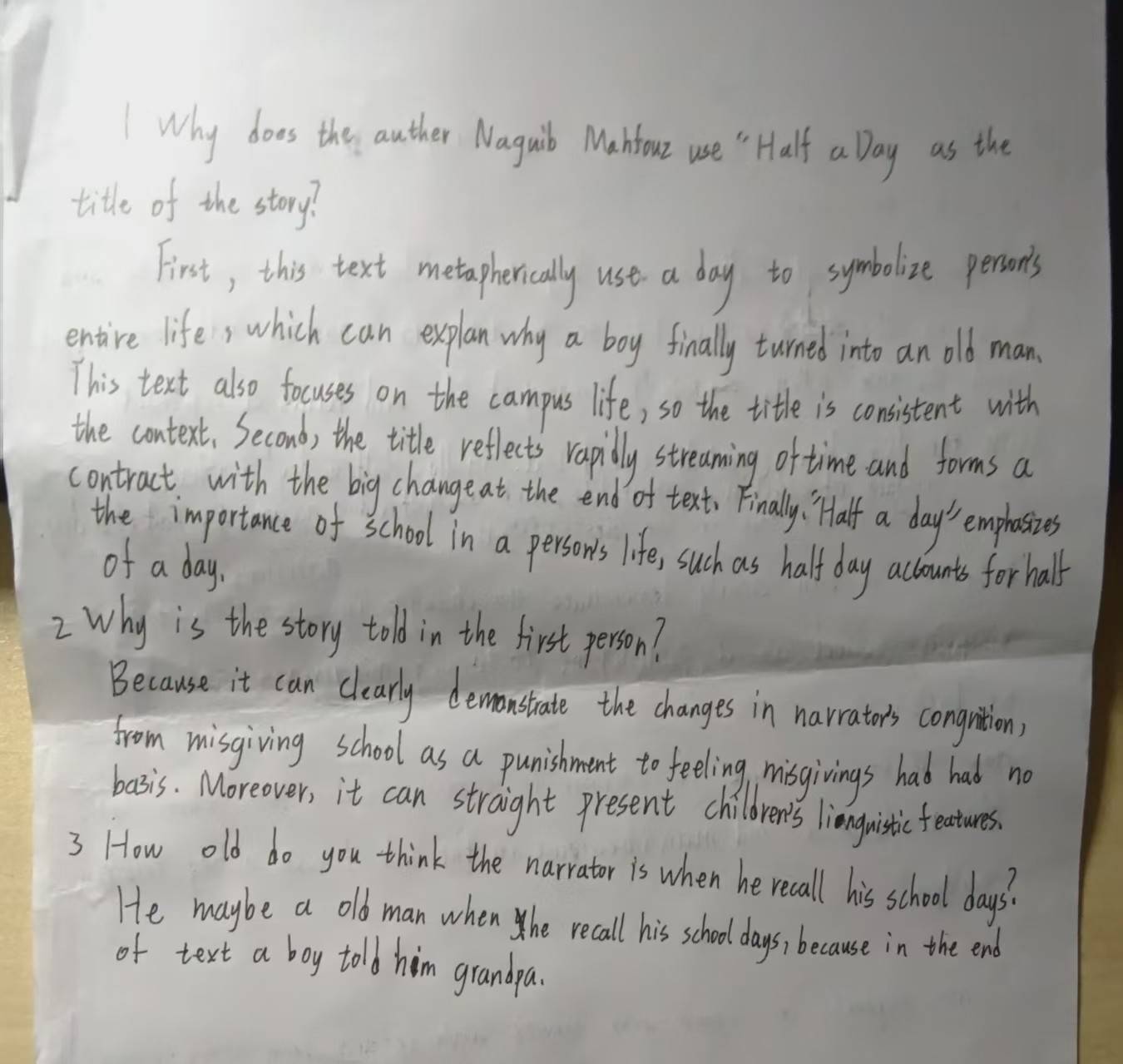
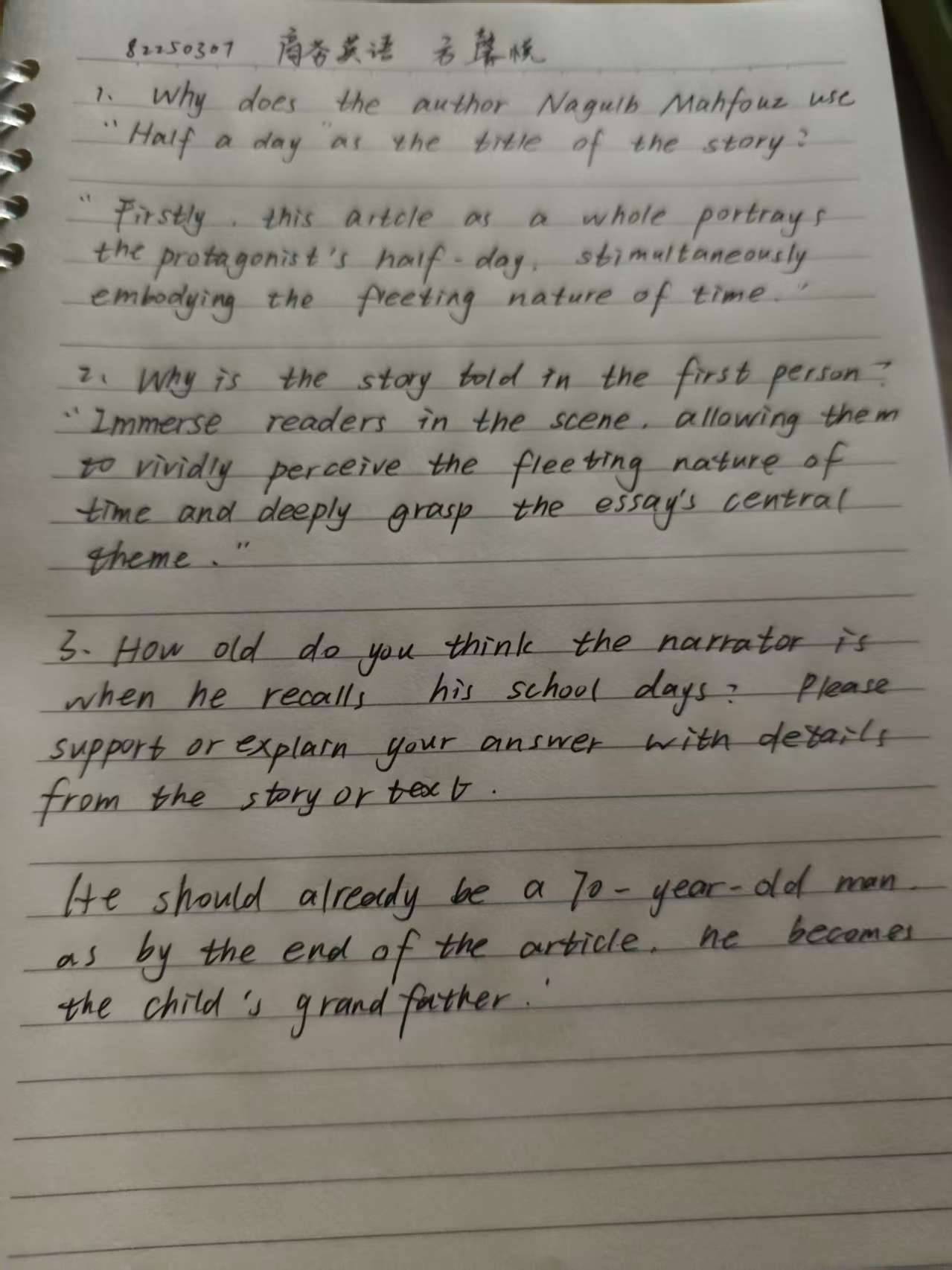
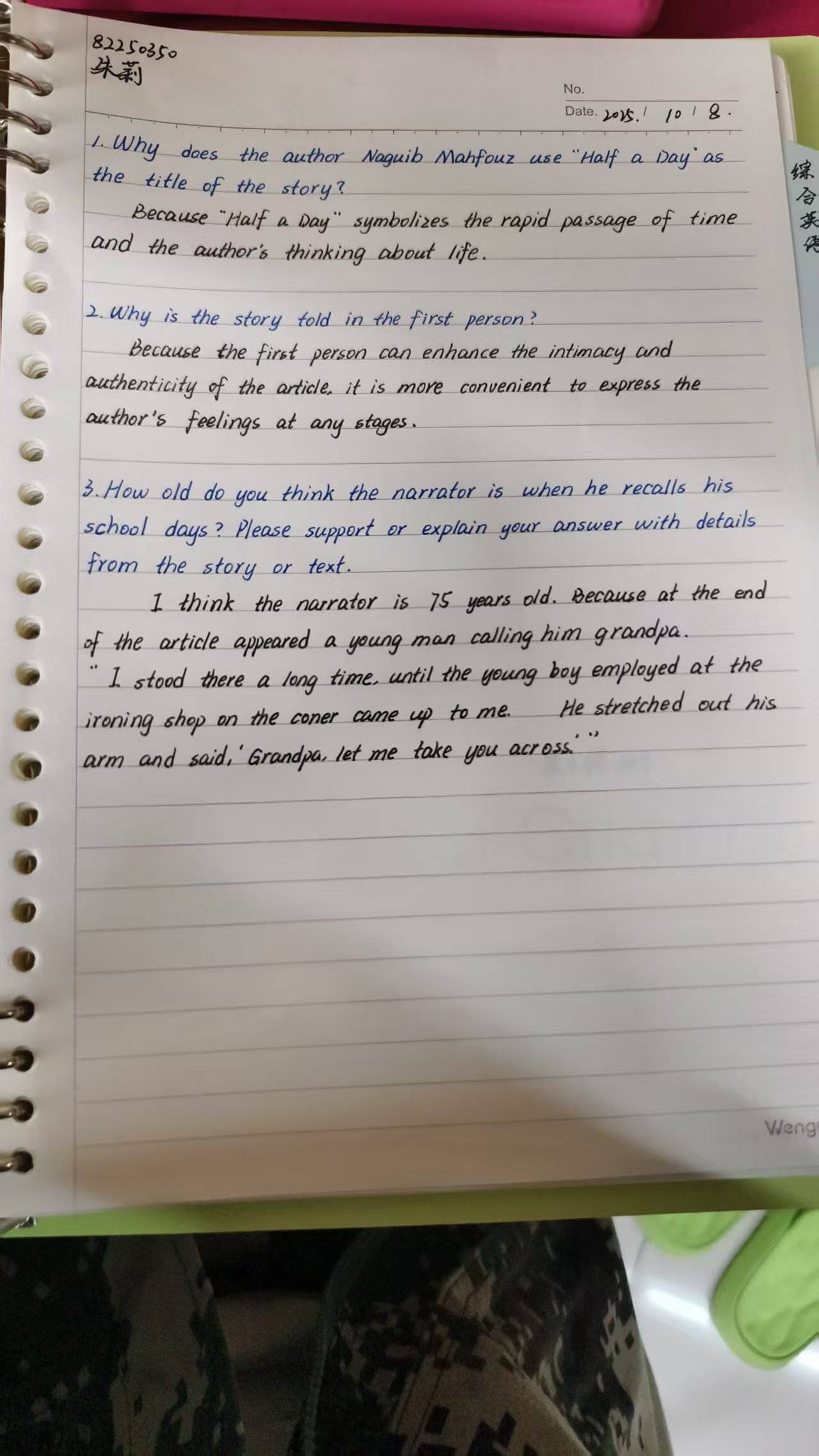
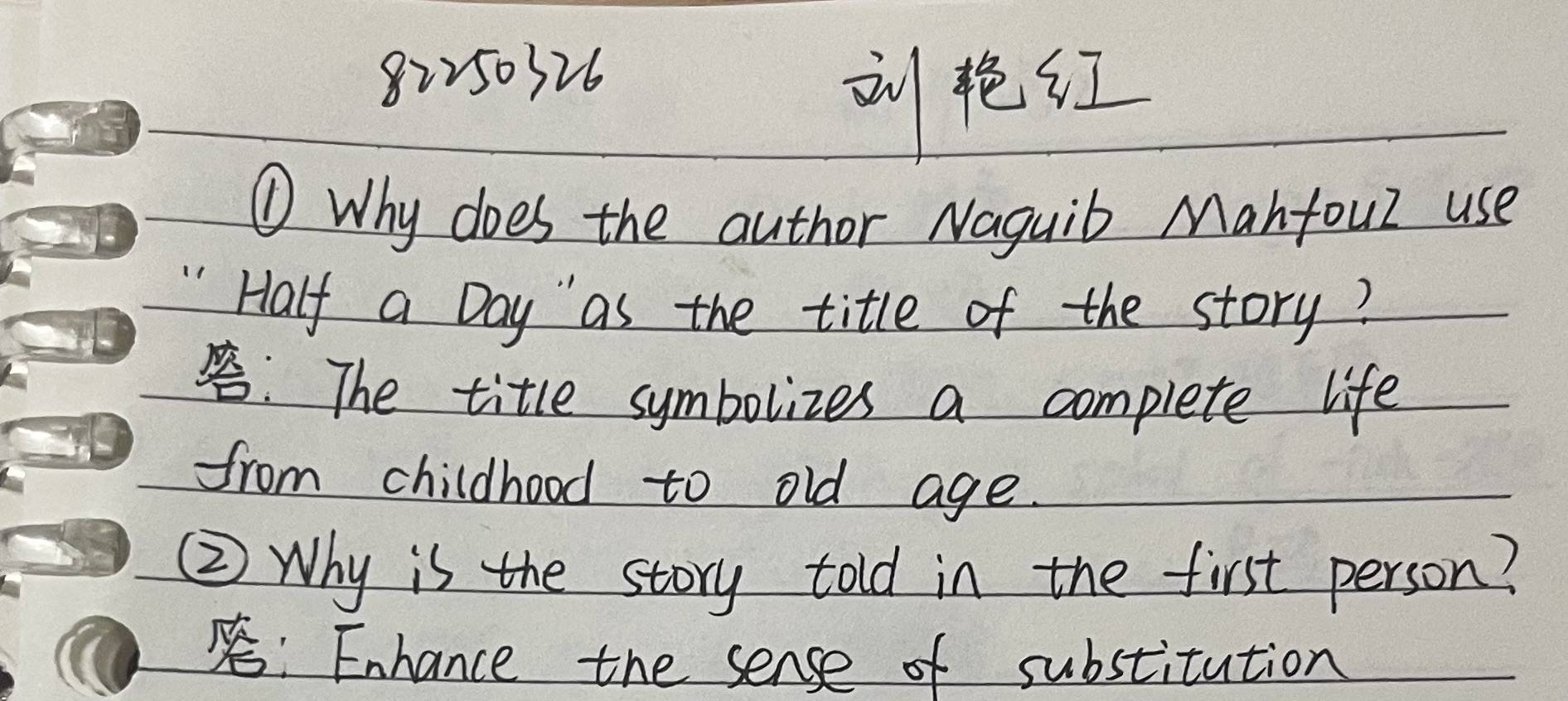
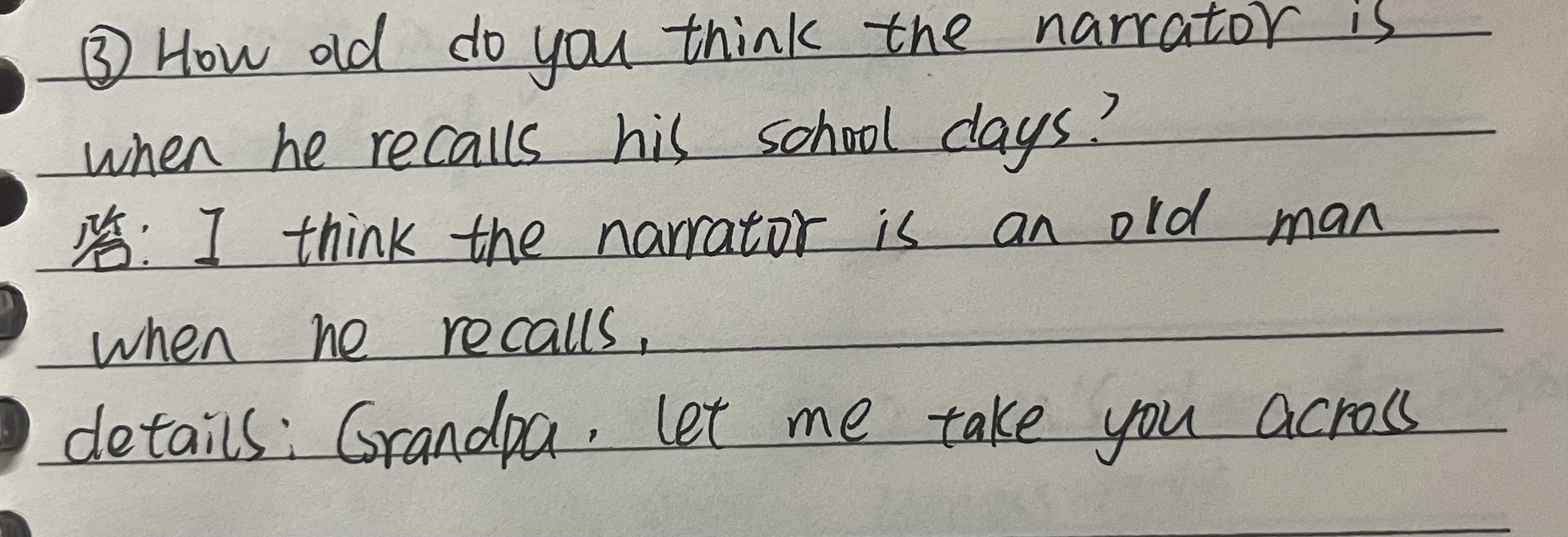
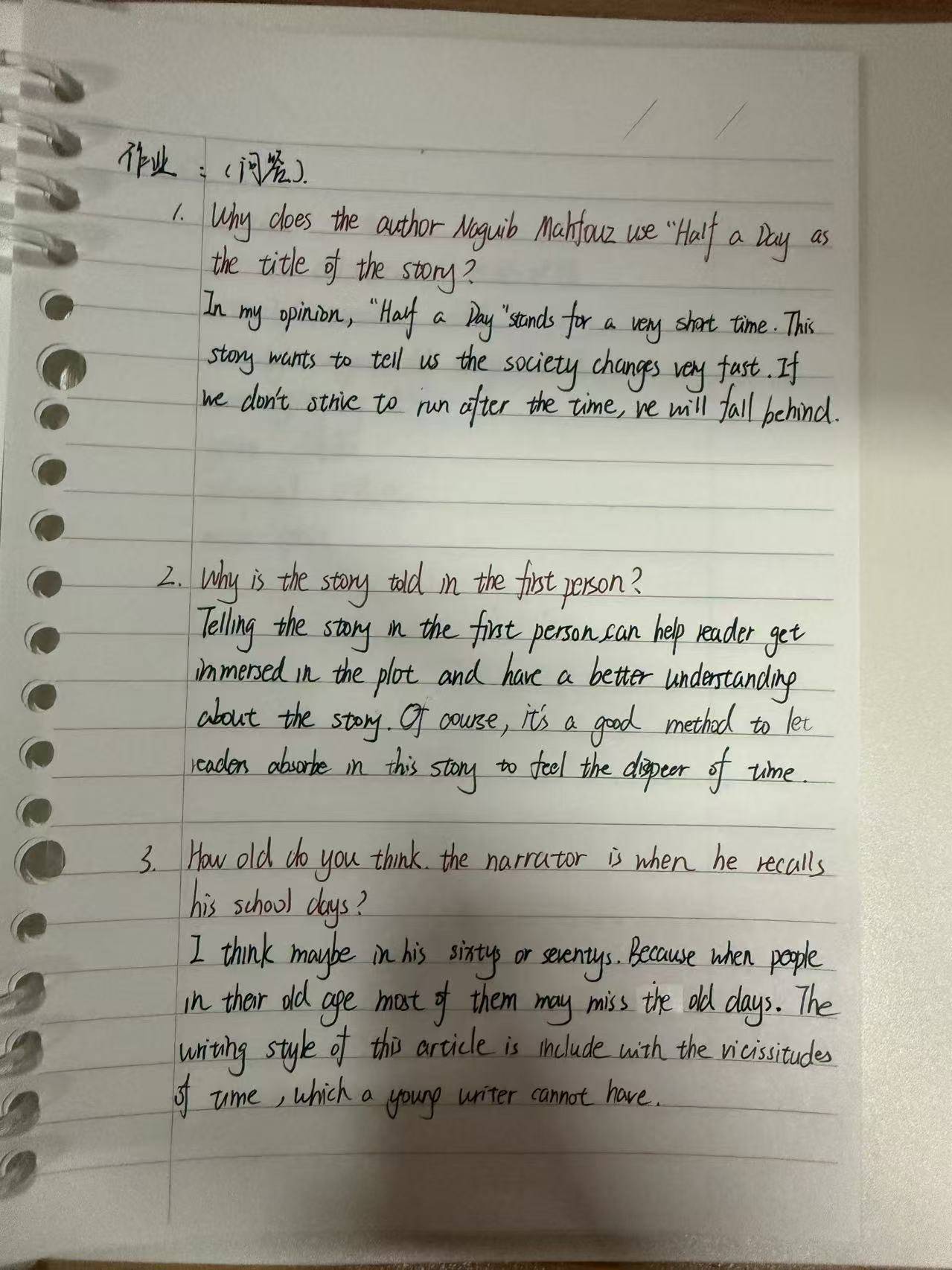
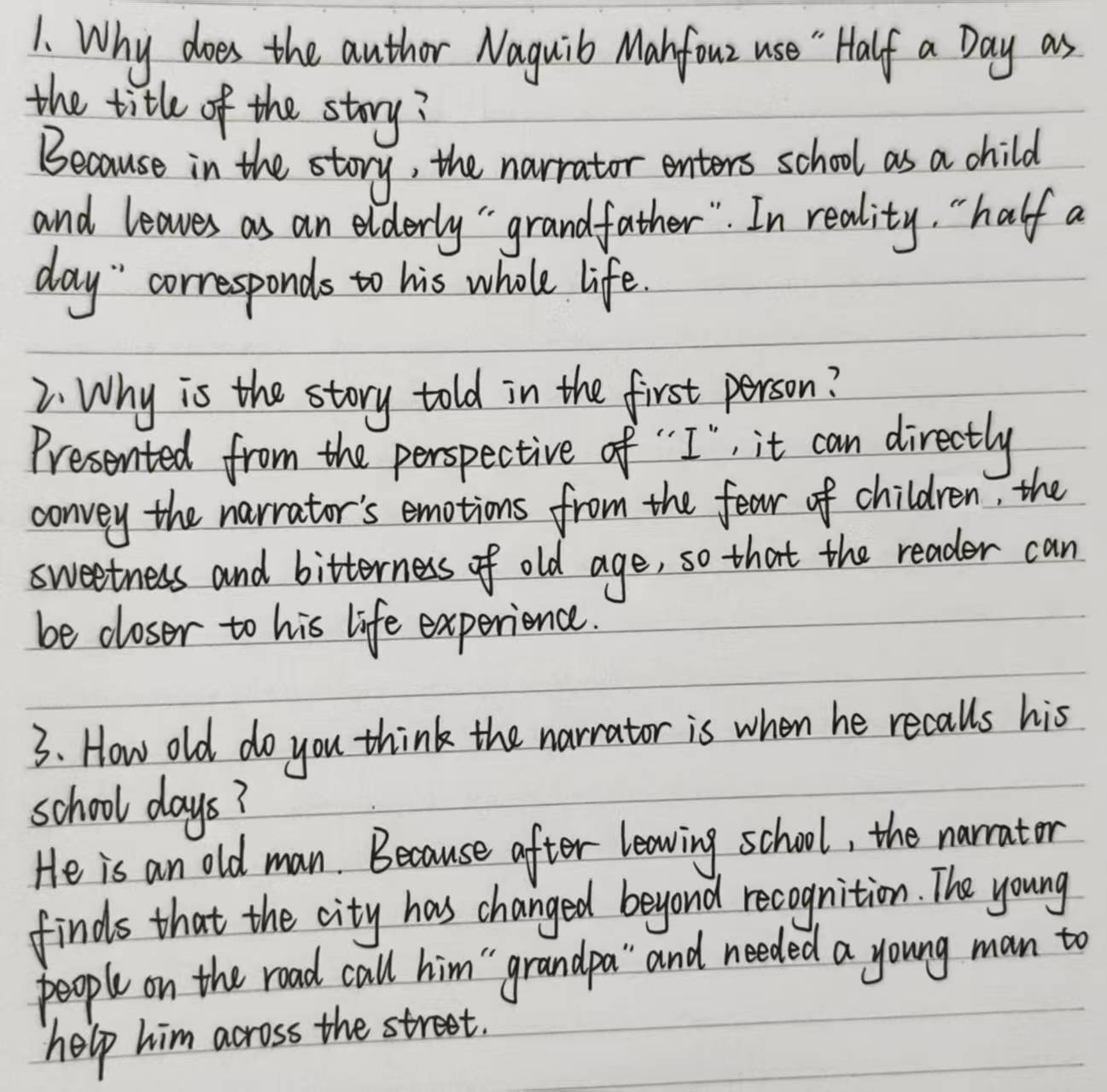
1. I think using this title can reflect how time flies.In the story,this boy spent half a day feom school to old age.his whole life has been half a day of forgiveness.the title reflects the author's contemplation on time and life.
2. The first-oerson perspective offres greater immersion and emotional impact.It allows readers to empathize with the passage of time and the changes in society.
3.I think he looks more like in his 80s.Becouse he needs the help of a young boy to cross the road in the last paragraph.

教学团队
课程特色
视频(49)
作业(48)
考试(1)
下载资料(1)
最新学员

Unit 1 Half a Day
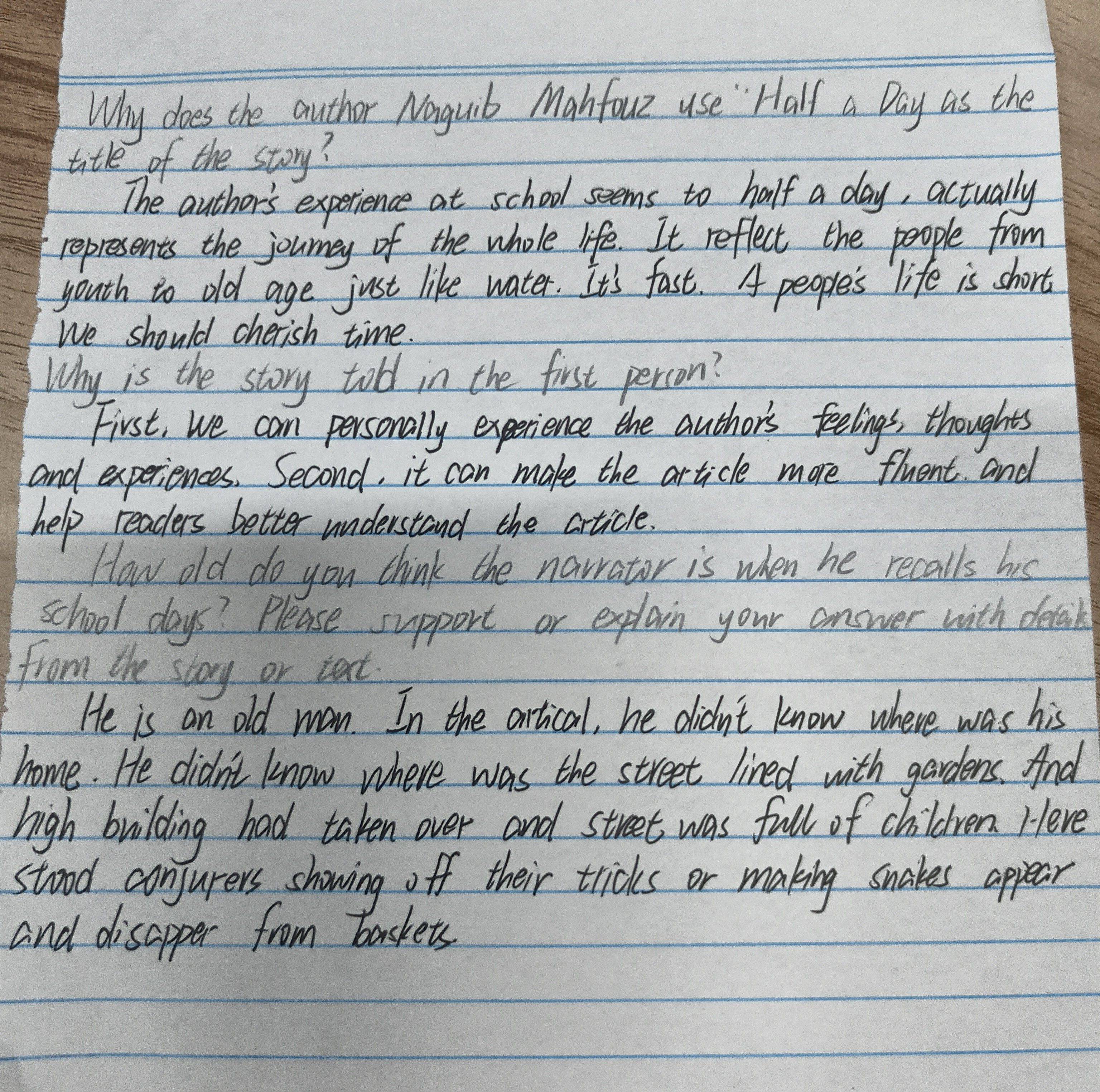
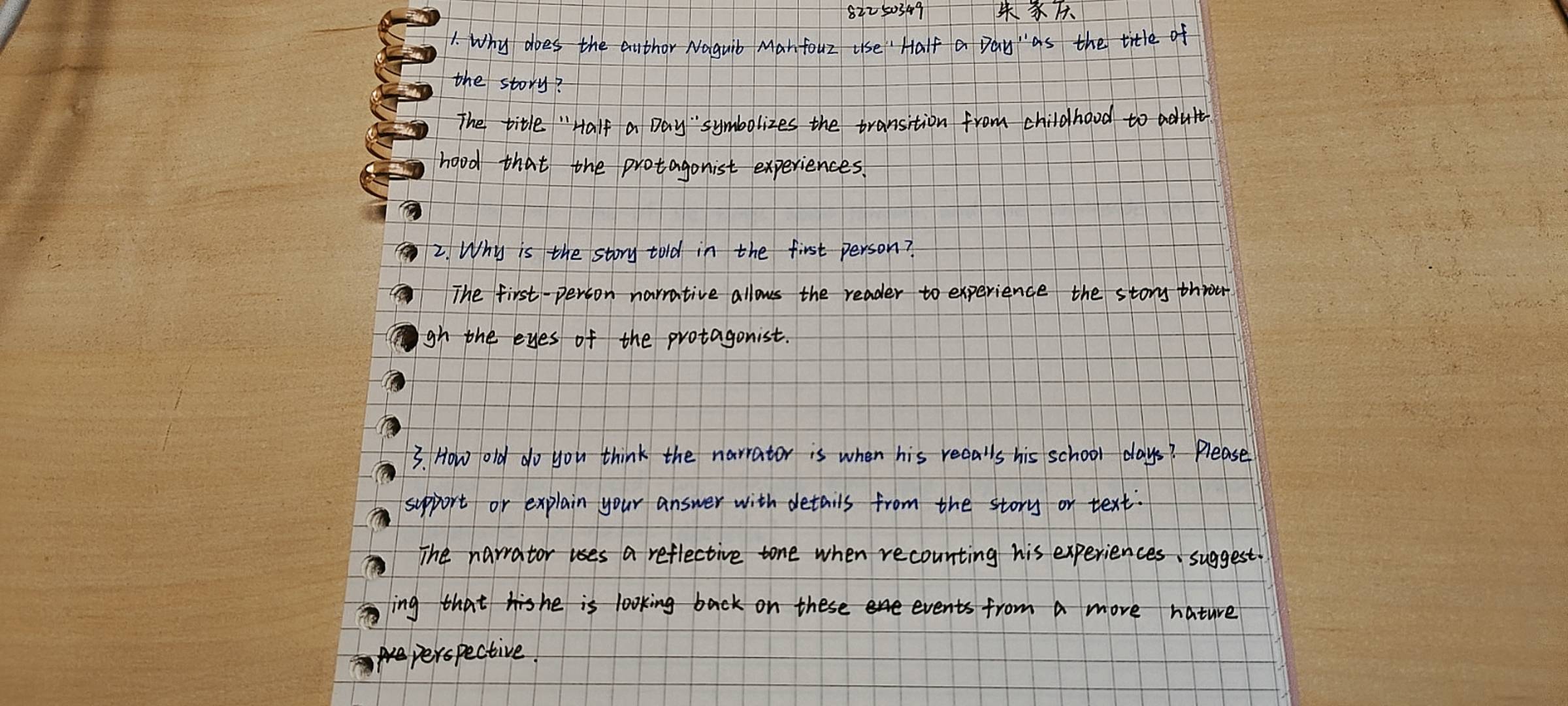
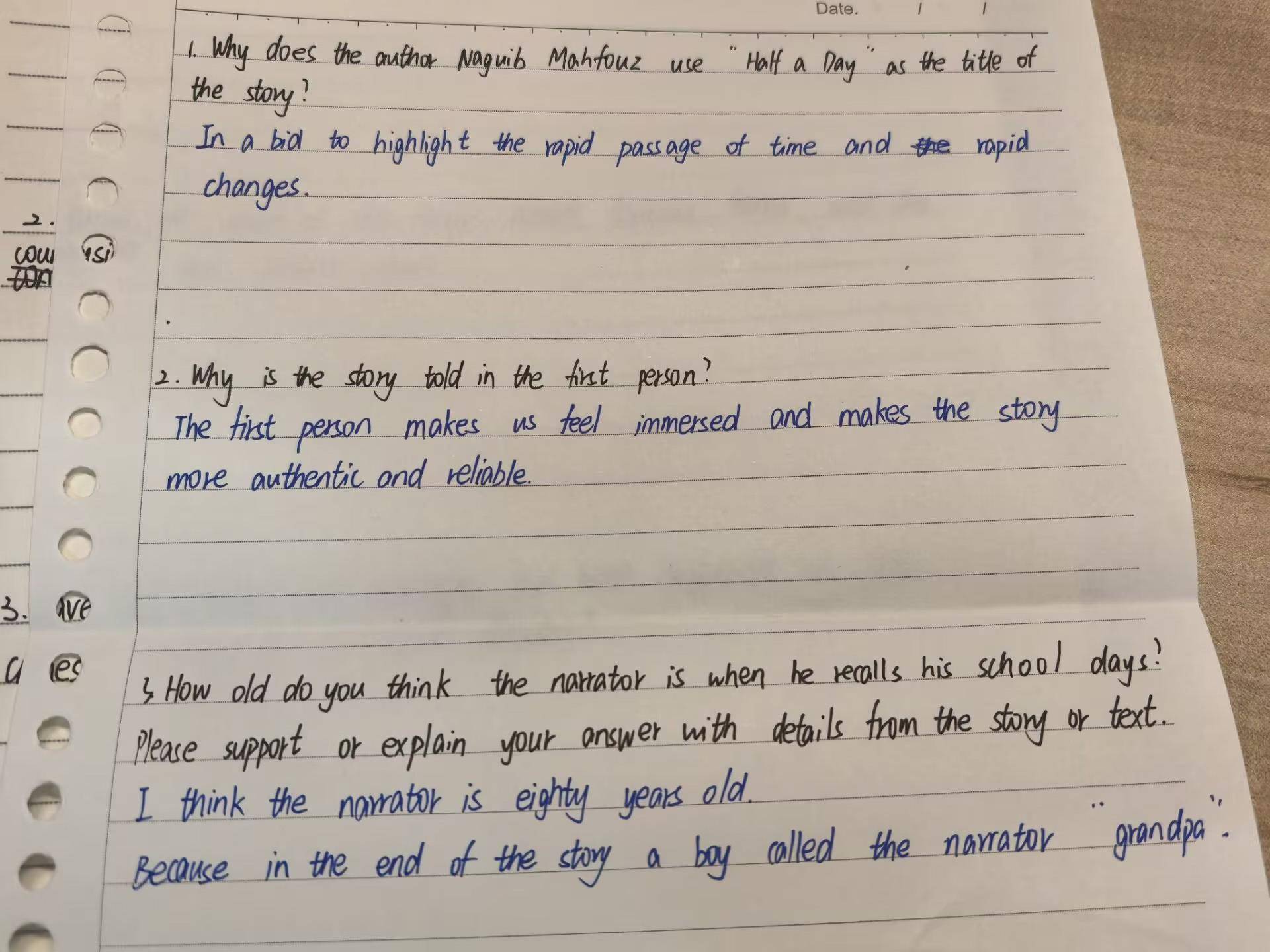
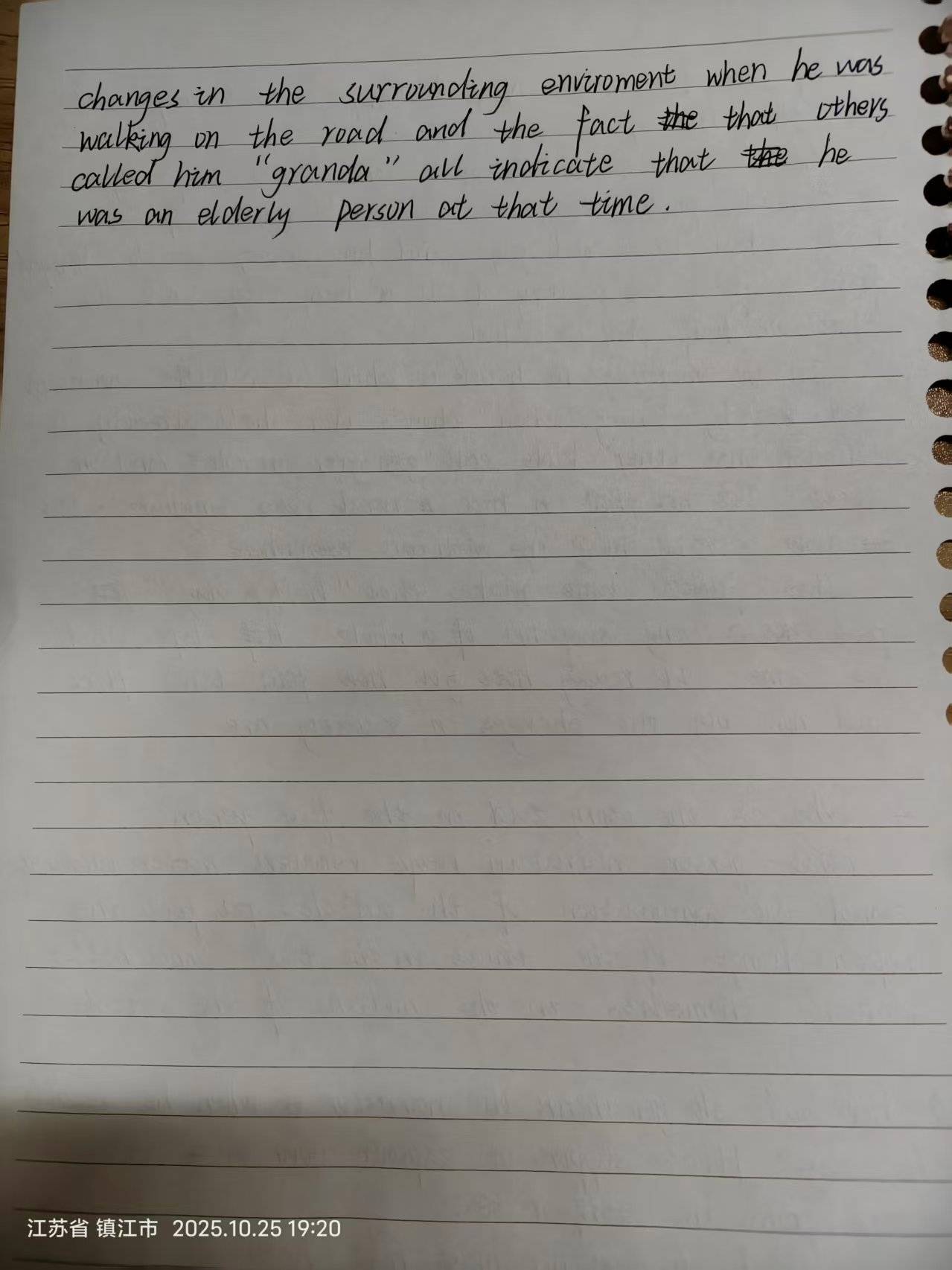
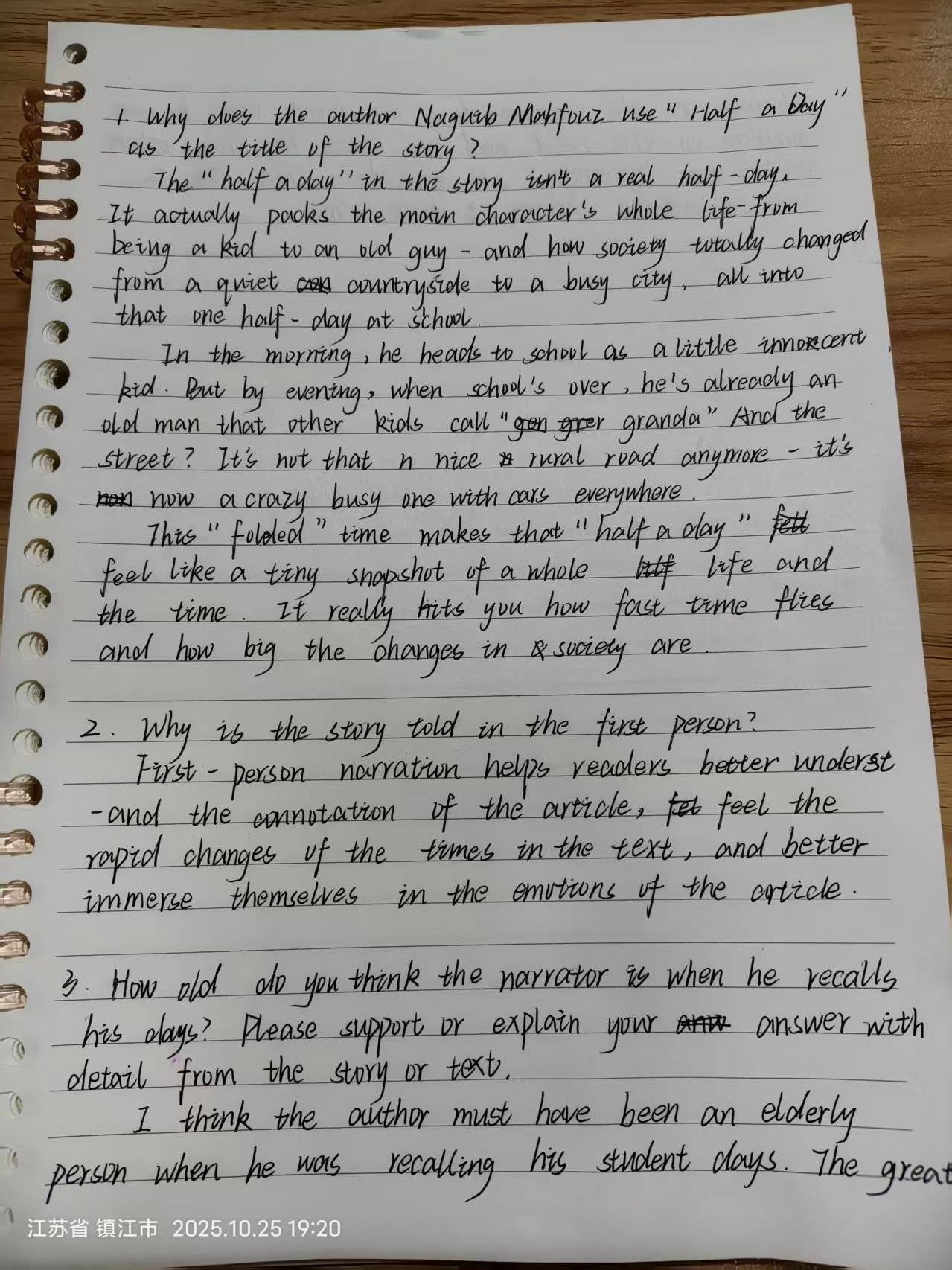
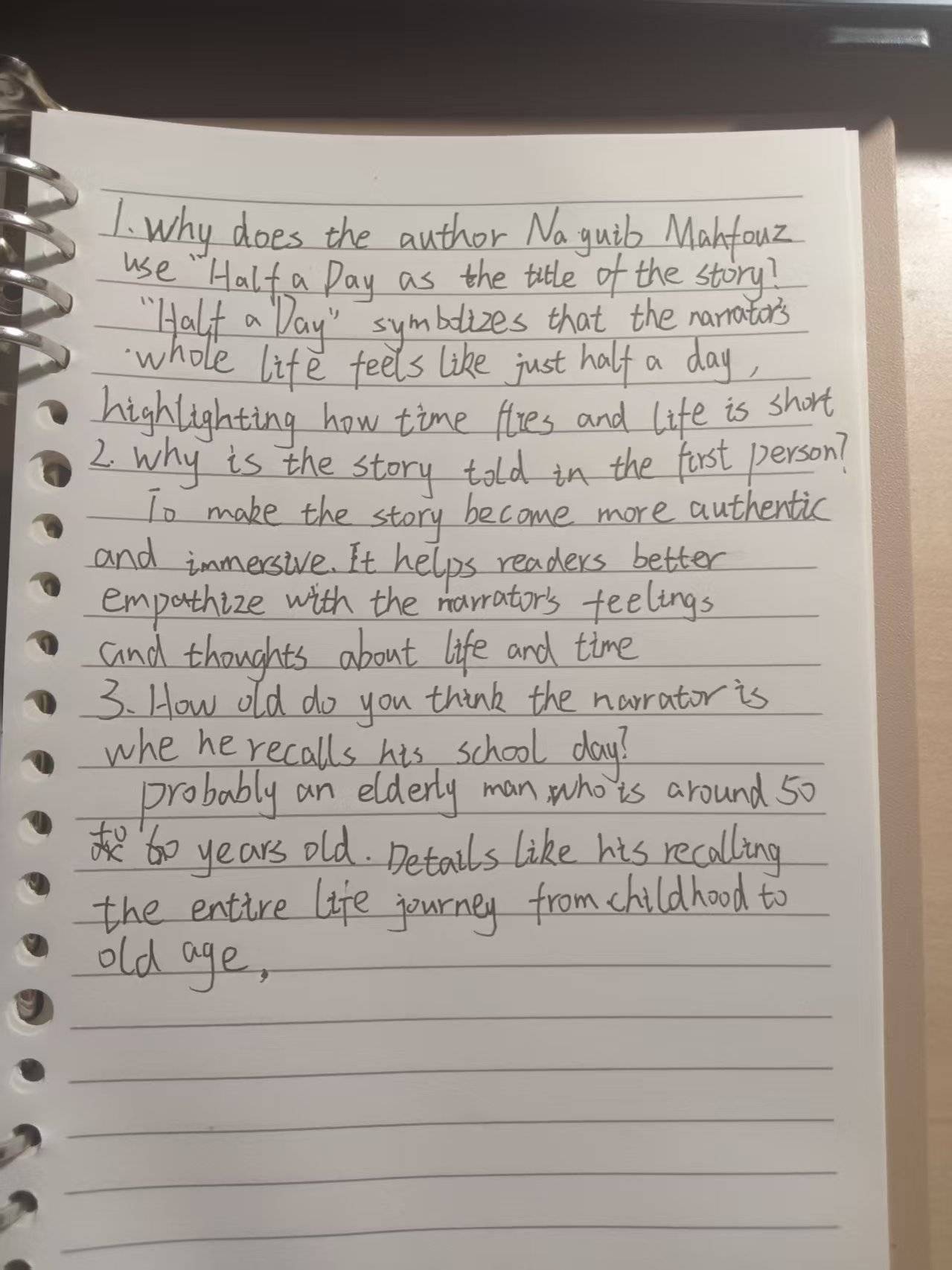
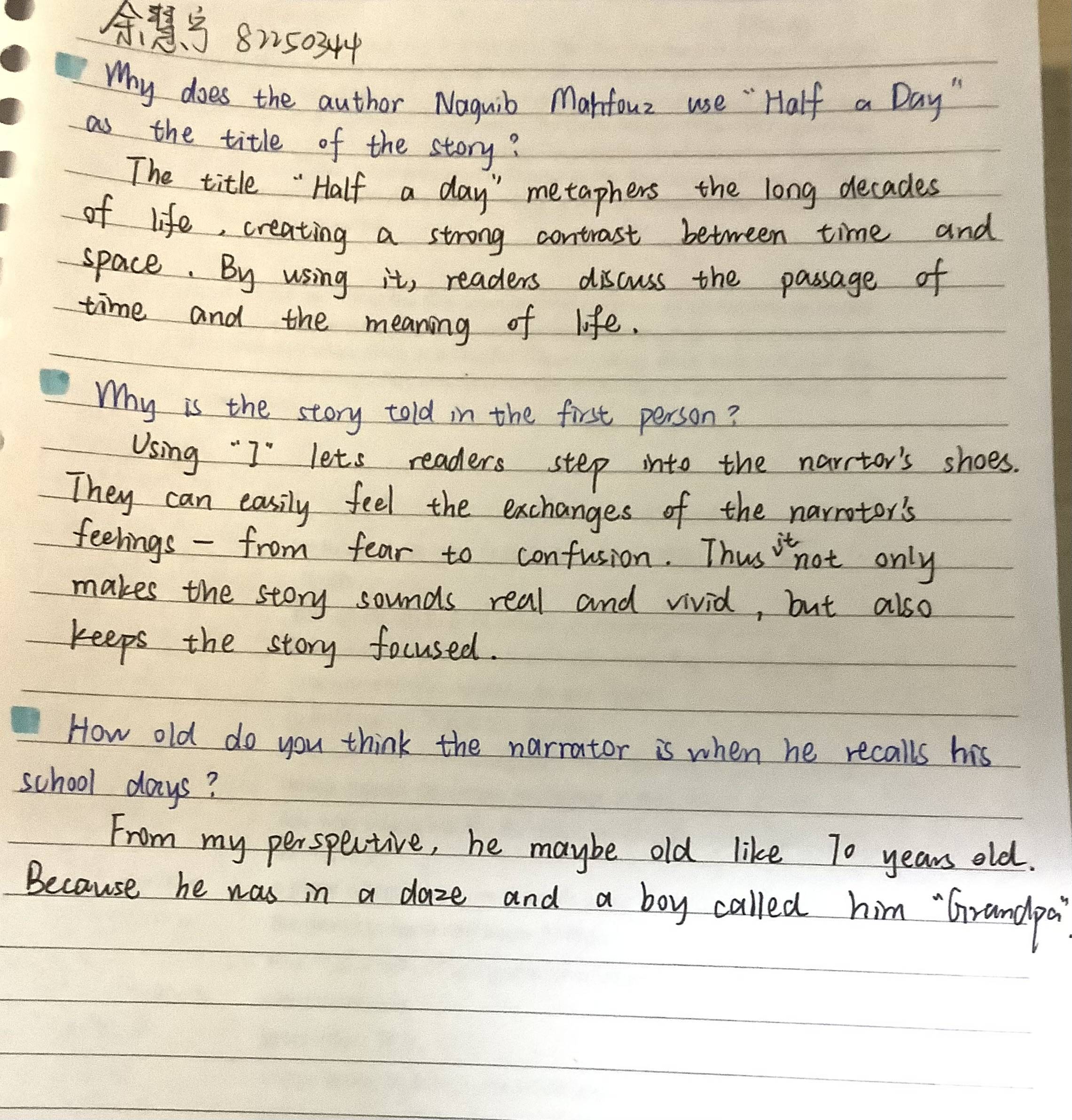
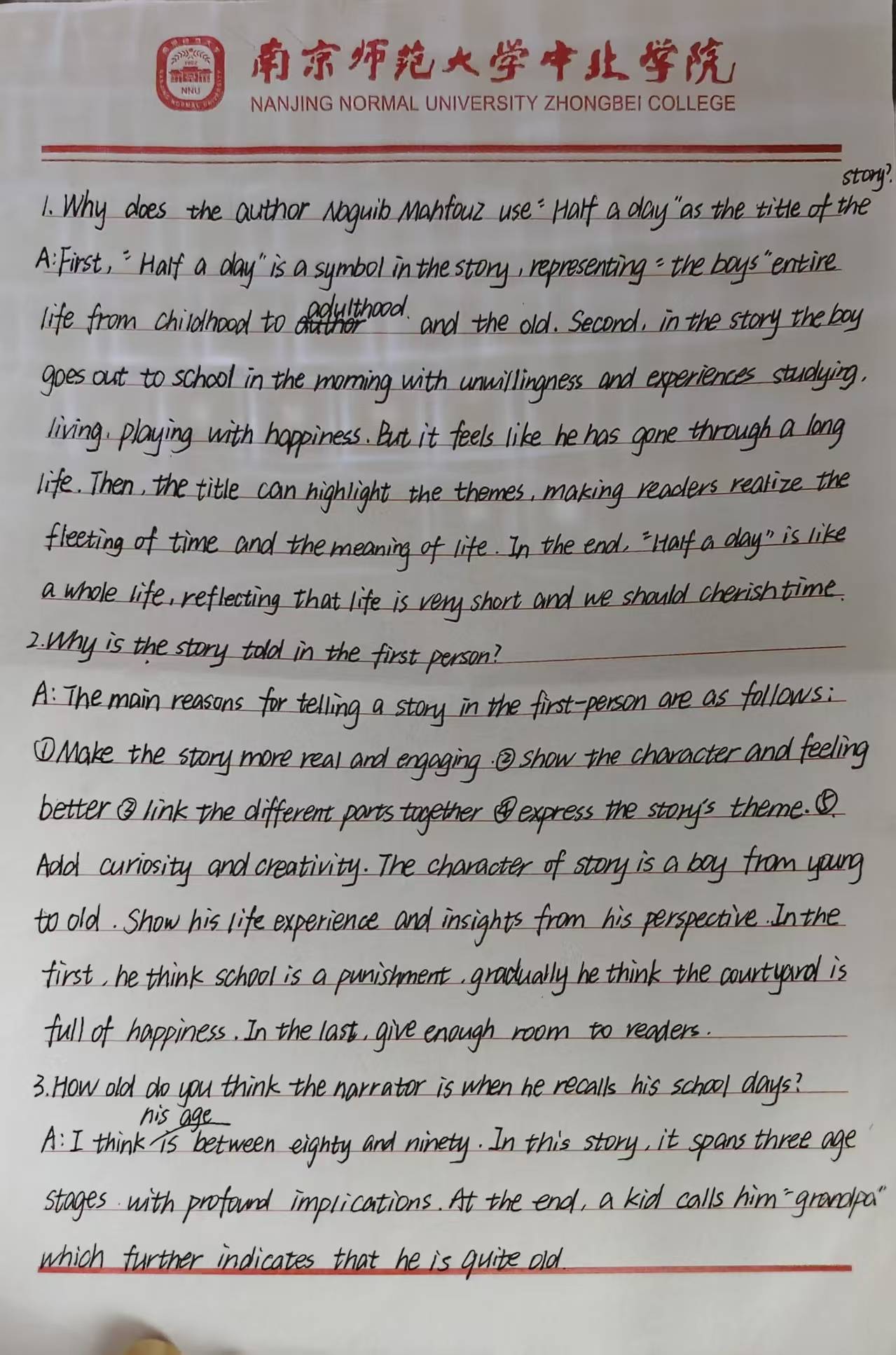
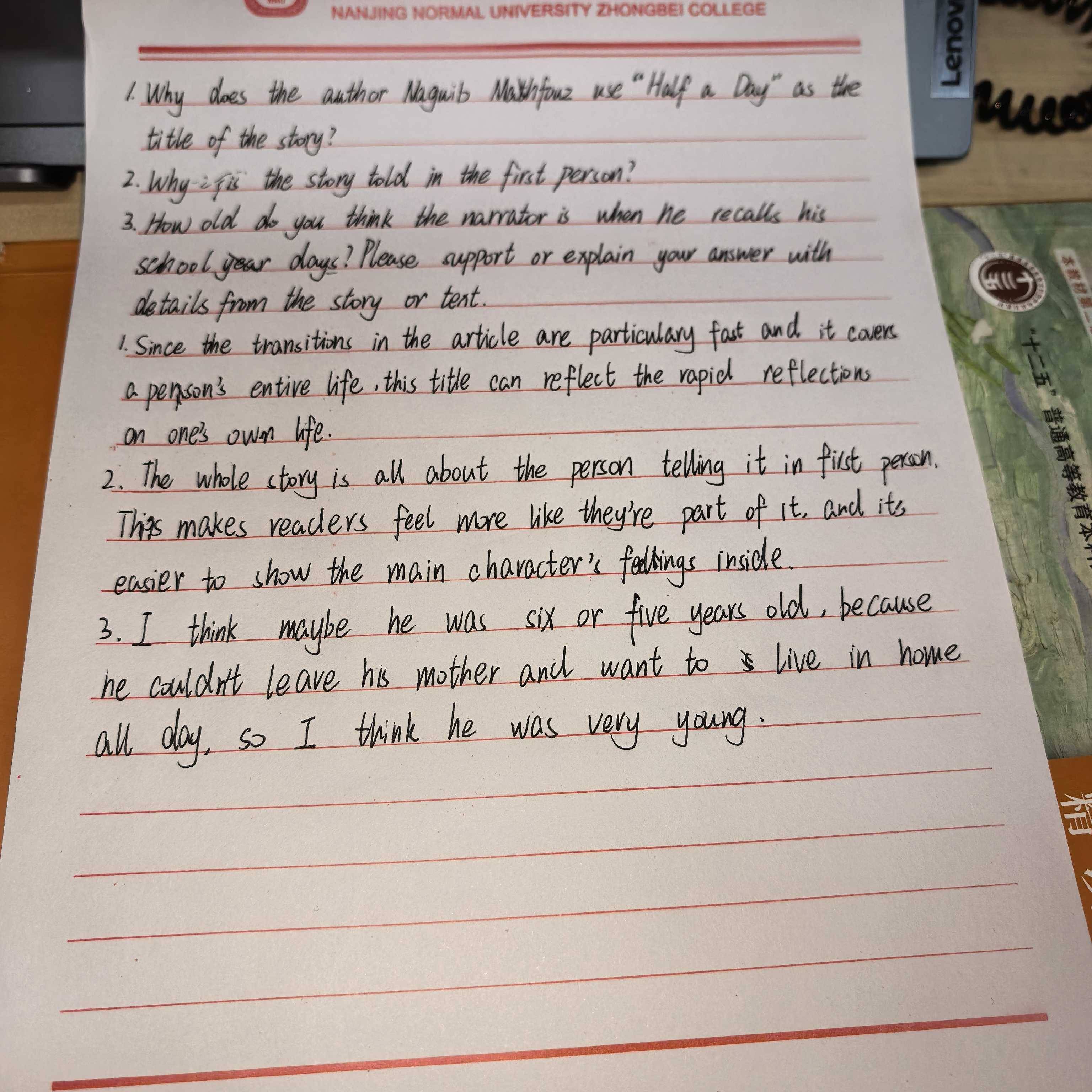
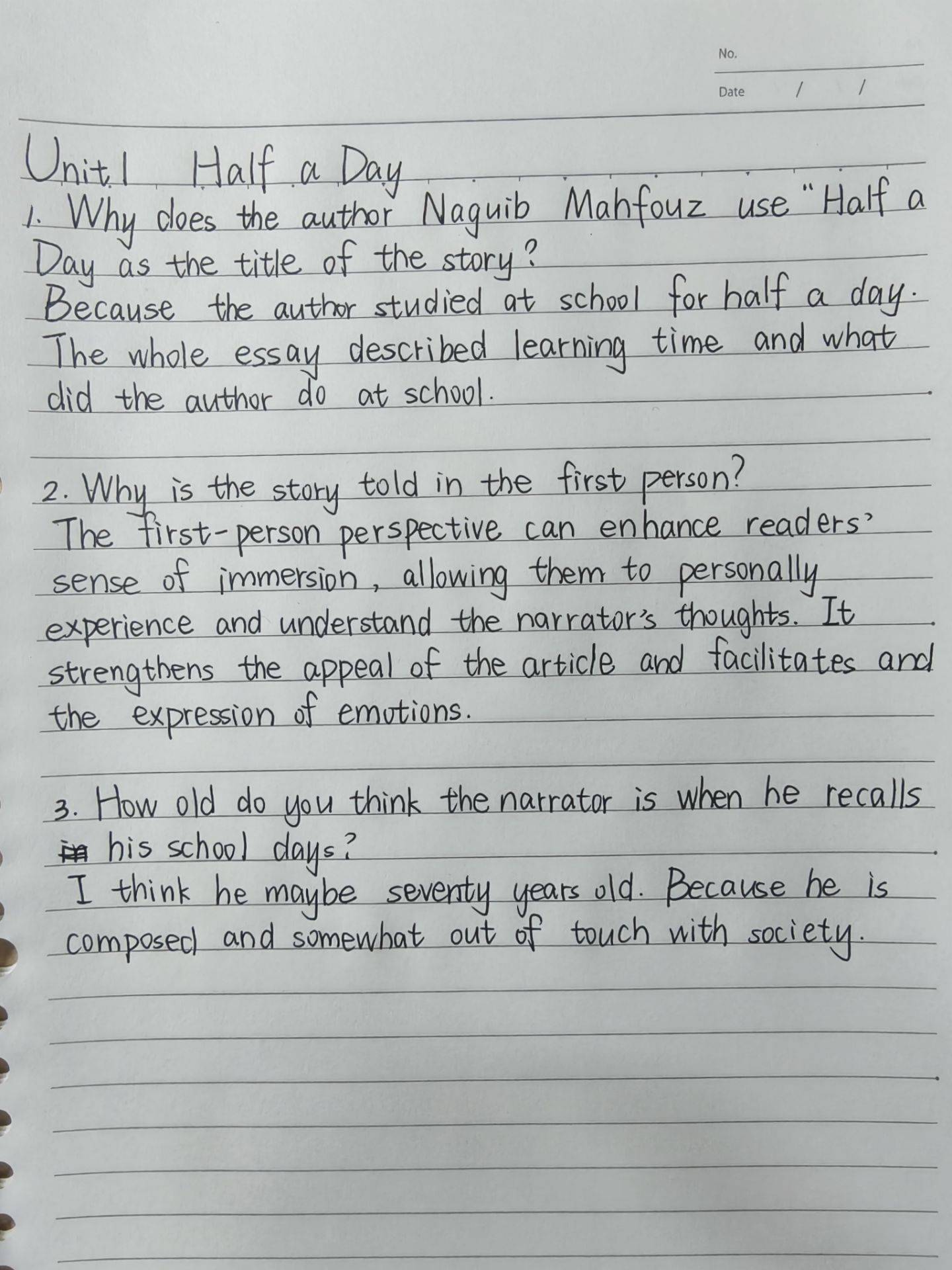
1. Why does the author Naguib Mahfouz use "Half a Day as the title of the story?
2. Why is the story told in the first person?
3. How old do you think the narrator is when he recalls his school days?
Please support or explain your answer with details from the story or text.
46 回复
-

-
钱诚天
-
明思言
-
-
-
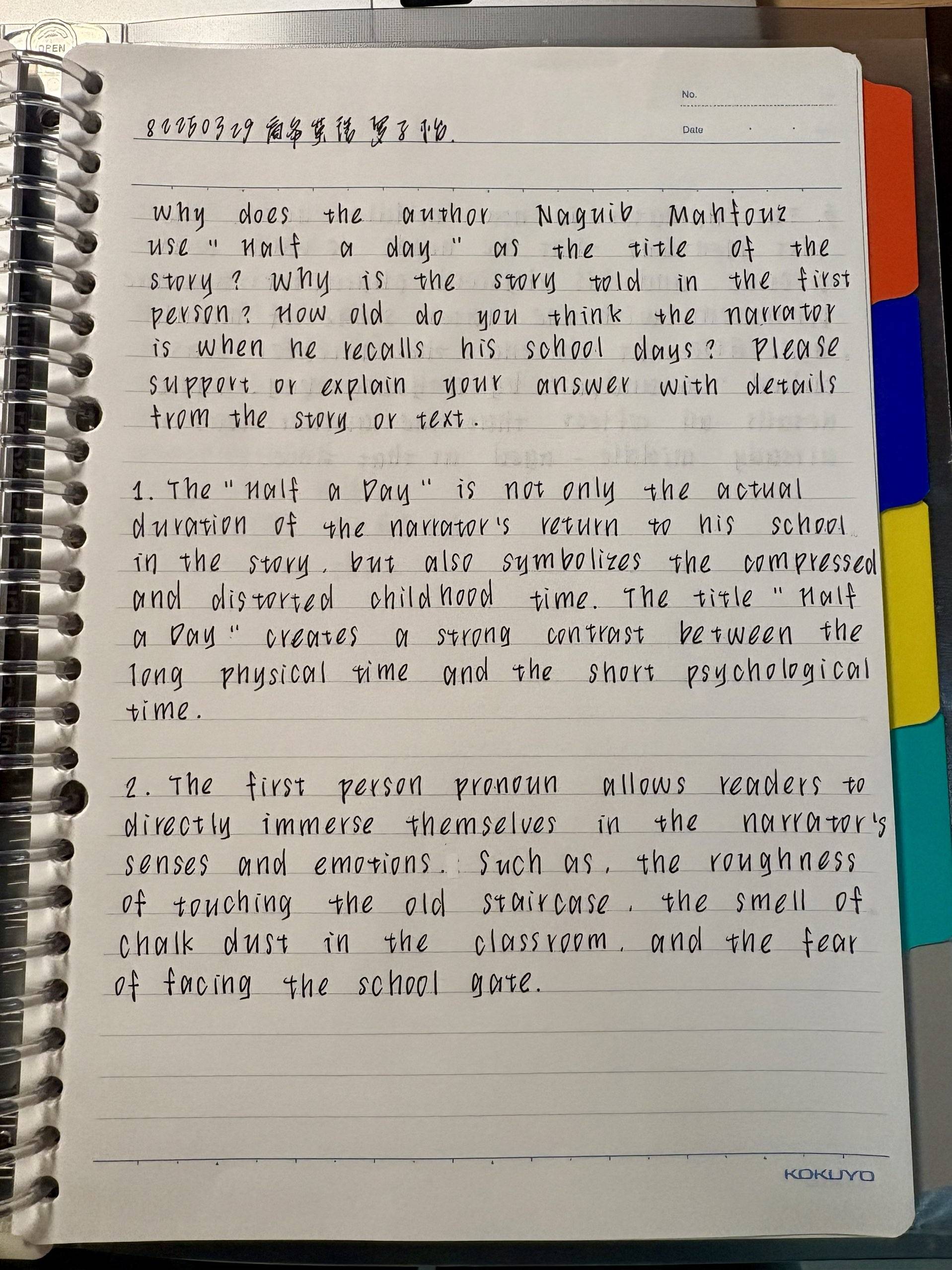
1.The title "Half a Day" is deeply ironic and serves as the story's central metaphor for the rapid, bewildering passage of an entire lifetime.
2.Using the first-person point of view is crucial for the story's impact and its central theme of subjective time.To Create Immediate and Subjective Experience.
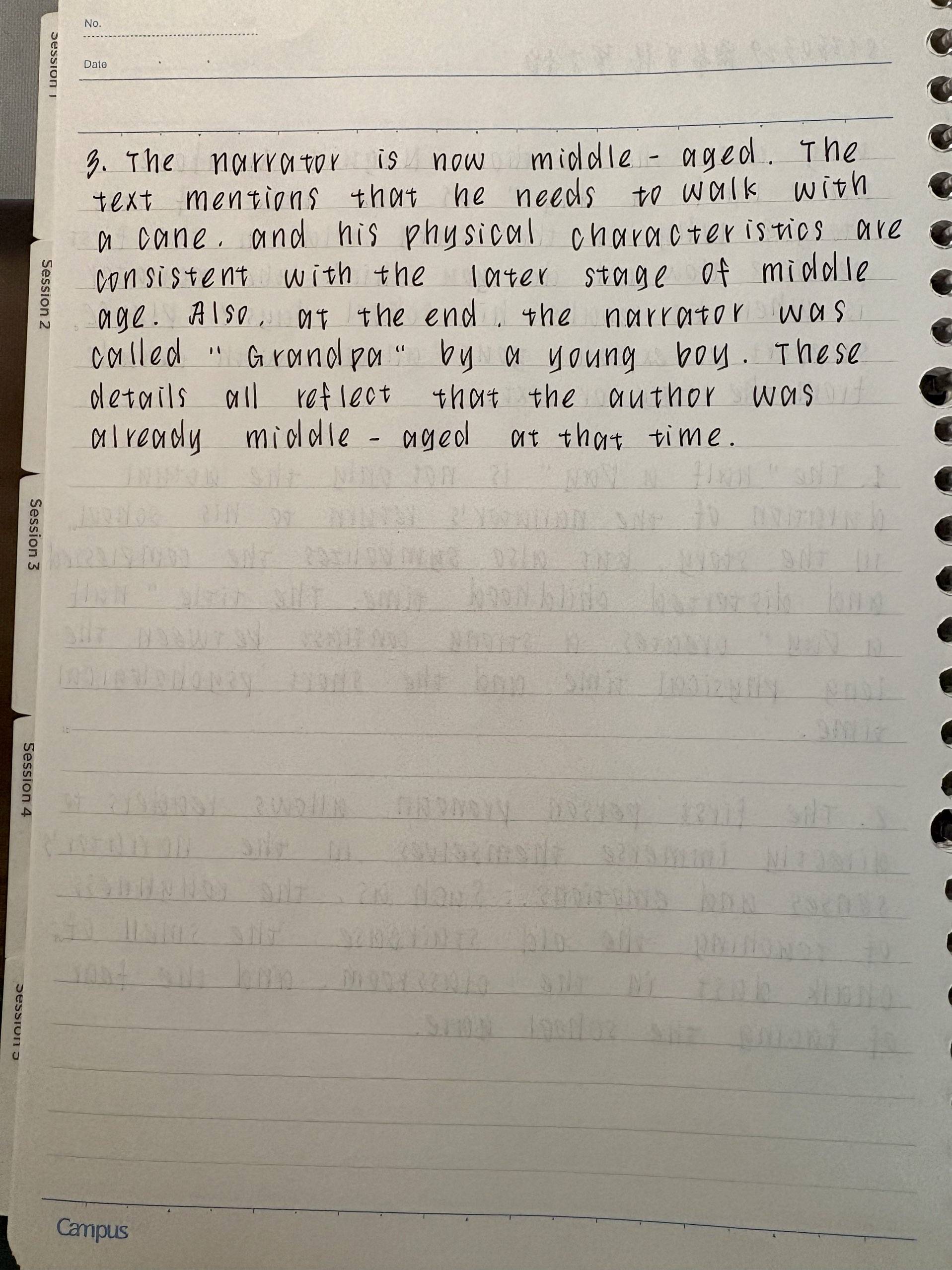
3.The narrator is most likely an old man, at the very end of his life, when he recalls his school days.
-
-
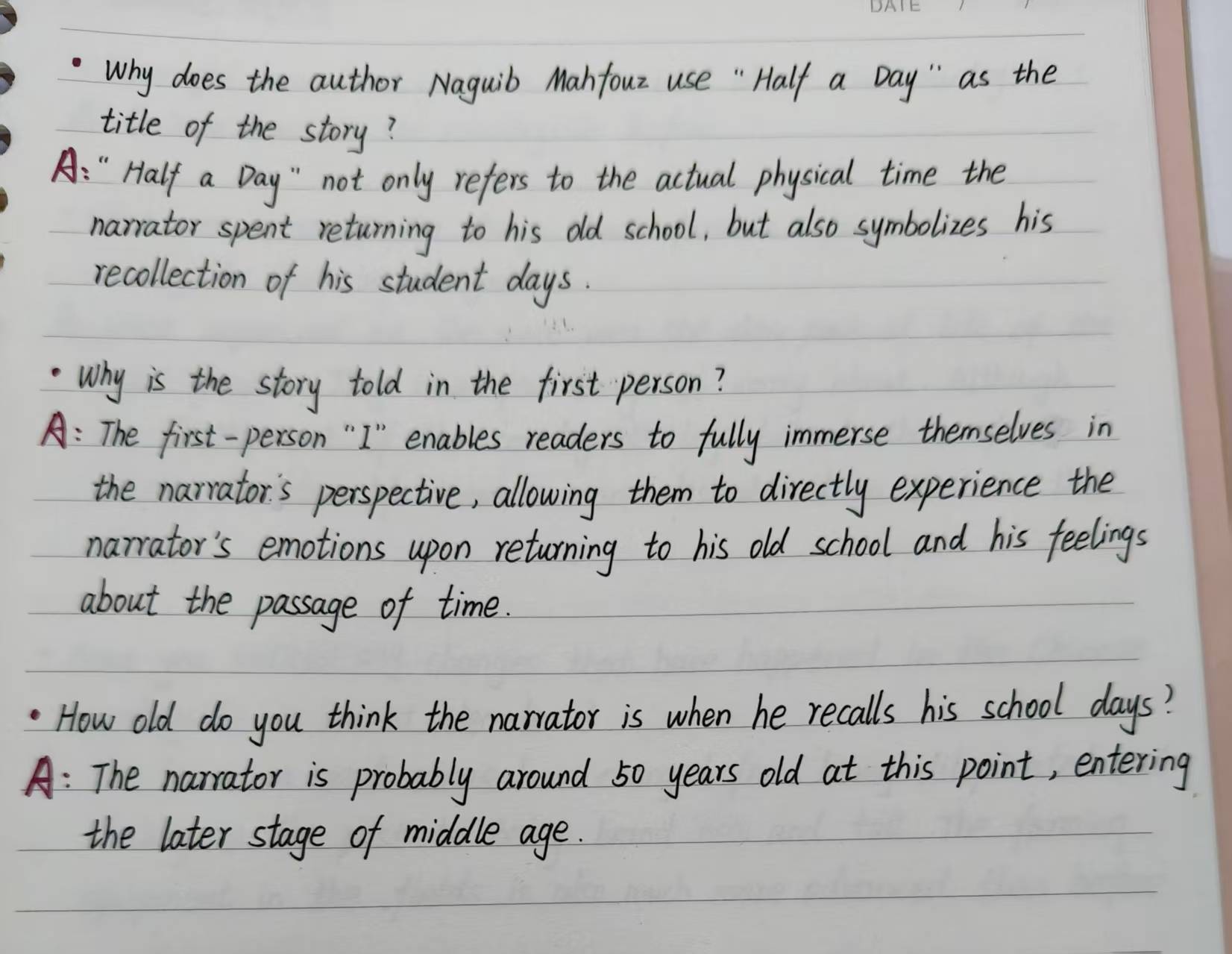
1、When the author entered the school for the first time, he felt both joy and pressure during his half-day stay there. However, he was surprised to find that the outside world had undergone tremendous changes in just half a day after school. This half-day not only reflects the change in the author's mindset but also demonstrates the changes of the times
2、The first-person perspective makes readers feel closer, enhances their sense of immersion, and allows them to better perceive the author's confused and helpless state of mind when facing changes.
3 、 I believe the narrator was already in his sixties or seventies when recalling the events. The changes in streets, cars, and population described in the text indicate that he had experienced decades of development. Furthermore, a child's line at the end of the text—"Grandpa, let me help you cross the road"—can show that the author was already elderly at that time.
-
Of course. Here are the answers to the questions in English, supported by details from the story.
---
1. Why does the author Naguib Mahfouz use "Half a Day" as the title of the story?
Answer:
Naguib Mahfouz uses the title "Half a Day" for its powerful symbolic meaning. On the surface, it refers to the narrator's first half-day at school. However, this short period metaphorically represents his entire life. The title highlights the theme of how time is perceived and the startling brevity of life.Support from the text:
· The story begins with the young boy dreading the "half day" he must spend at school, which feels like a long and significant journey into the unknown.
· When he exits the school gates at the end of that "half day," he is shocked to find himself an old man, and the world around him has completely transformed. The fields and gardens are gone, replaced by bustling traffic and tall buildings.
· This compression of a lifetime into a single morning suggests that life passes in the blink of an eye, making the title a profound commentary on the passage of time.---
2. Why is the story told in the first person?
Answer:
The story is told in the first person to create a strong sense of immersion and emotional impact. This narrative perspective allows readers to experience the protagonist's journey directly, from his childhood fears to his elderly confusion. The sudden, shocking realization of time having passed is far more powerful because we discover it alongside the narrator.Support from the text:
· We feel the narrator's initial anxiety as he clings to his father's hand and his fear of the "huge, high-walled building."
· We share in his experiences throughout the school day—the lessons, the play in the yard, the moments of friendship and conflict.
· Most importantly, the first-person perspective makes the ending so jarring. The narrator (and thus the reader) only gradually realizes the truth. His confusion ("In a flash, the face of the world changed") and his need for a young boy to help him cross the road are felt directly, making the theme of life's transience deeply personal and unsettling.---
3. How old do you think the narrator is when he recalls his school days?
Answer:
I believe the narrator is a very old man, likely in his eighties, when he is recalling his school days.Support from the text:
The clearest evidence is in the final paragraph. The narrator describes his physical state after leaving the school: he could barely stand, and he needed to rely on a young boy to help him cross the road. This level of physical frailty strongly suggests an advanced age, far beyond middle age. Furthermore, the extensive changes in the cityscape—from fields and pathways to a chaos of cars and high-rises—also imply that several decades have passed, supporting the idea that he is an elderly man looking back on a very long life. -

-
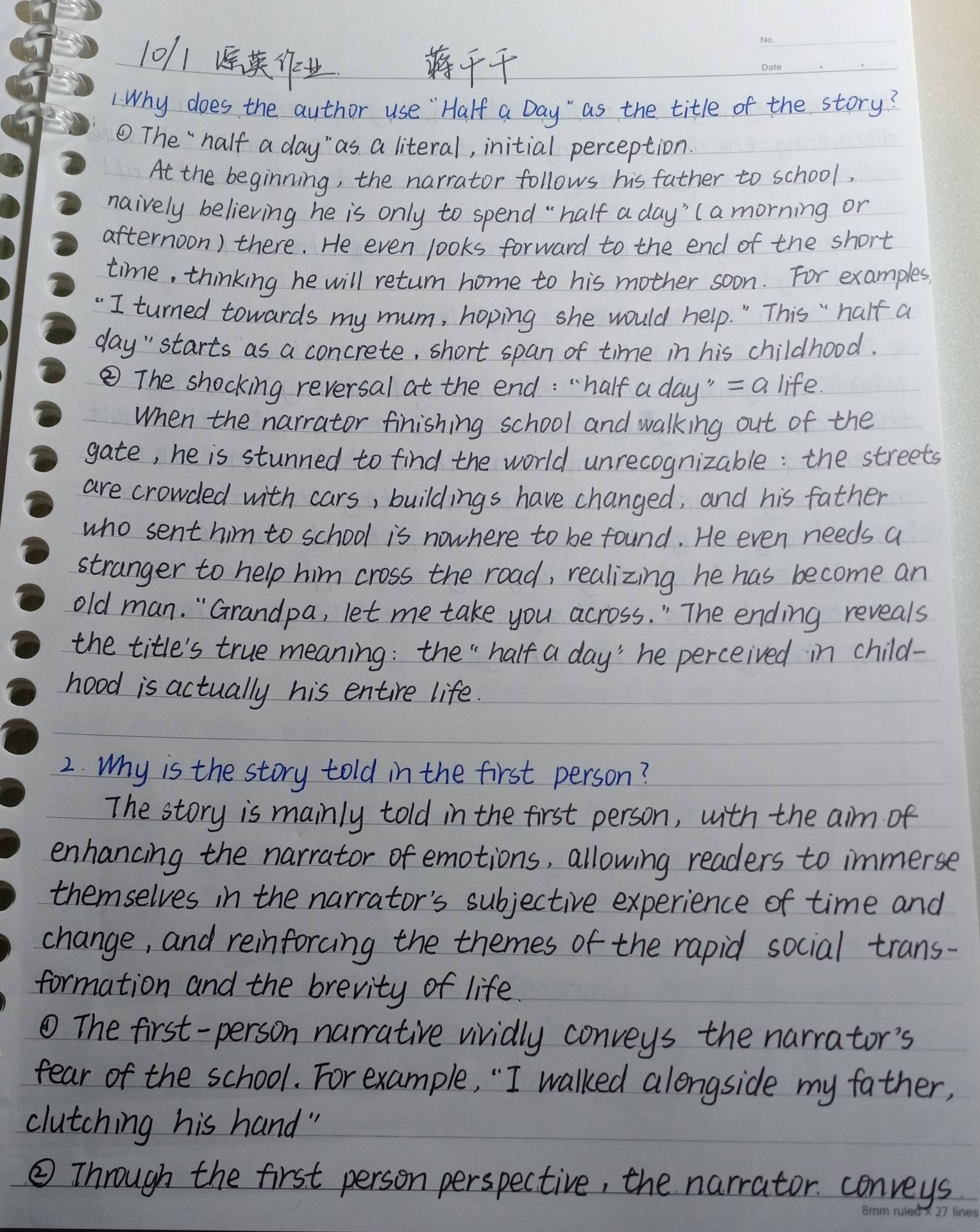
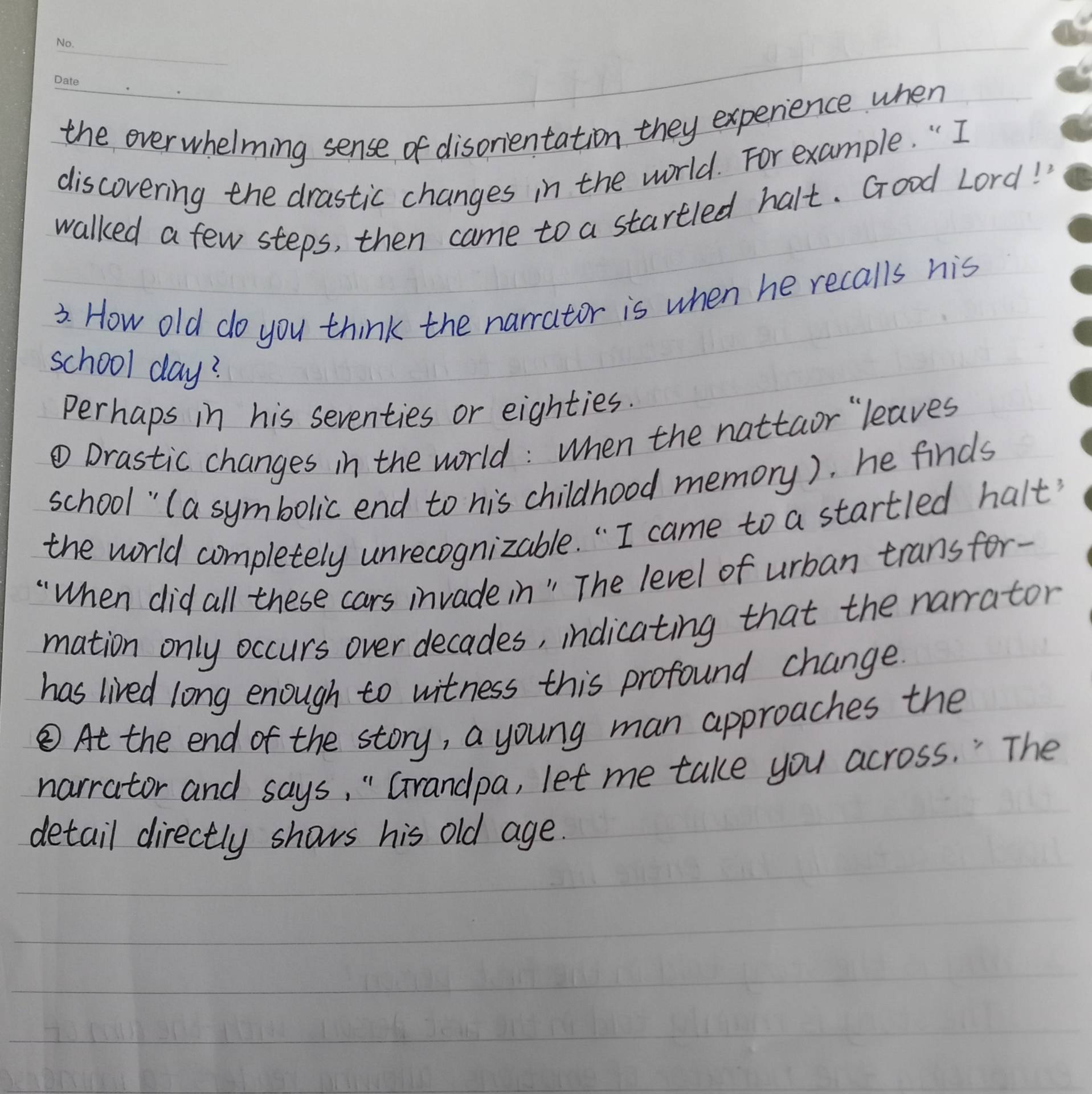
1. "Half a Day" is the title because it represents a lifetime: the narrator enters school as a boy and leaves as an old man, framing an entire life as a single "half-day."
2. The story uses first-person narration to strengthen the intimacy and authenticity of the narrator’s experience: it lets readers directly feel his confusion, growth, and shock as he realizes his life has passed in "half a day."
3. The narrator is a grandfather when recalling his school days. Evidence: After leaving school, he finds the city completely changed, and a young man calls him "grandpa" (e.g., "grandpa, let me take you across").
-
-

-
-

-
-
蒋千千
-

-
-
-
黄婷婷
-
姚佳伟
1.I think“hdlf a day"as the title of the story not only show the specific stata of time,but also express the author's perception of time and life.
2.Becase this story is the author's recollection of the past and it also could to give the reader a batter understanding of the author's feeling.
3.I think he is in his old age.From the fact that"he stretched out his arm and said:grandpa,let me take you across".
-

-
1. Why does the author Naguib Mahfouz use "Half a Day" as the title of the story?
The title "Half a Day" symbolizes the brevity of life. The narrator's experience at school, which seems like a short period (half a day), actually represents his entire life journey. It implies that life passes quickly, just like half a day, and encapsulates the theme of the transience of life.2. Why is the story told in the first person?
Telling the story in the first person makes the narrative more intimate and personal. Readers can directly experience the narrator's emotions, thoughts, and perceptions as he goes through his school day and reflects on his life. This perspective helps to draw readers into the story and makes the themes of life's passage more relatable.3. How old do you think the narrator is when he recalls his school days? Please support or explain your answer with details from the story or text.
The narrator is likely an old man when he recalls his school days. At the end of the story, he finds himself at the end of his life, realizing that the time he spent at school was actually his whole life. The reflections on the passage of time, the changes he has gone through, and the sense of approaching the end of life all suggest that he is looking back on his school days from a very advanced age. -
-
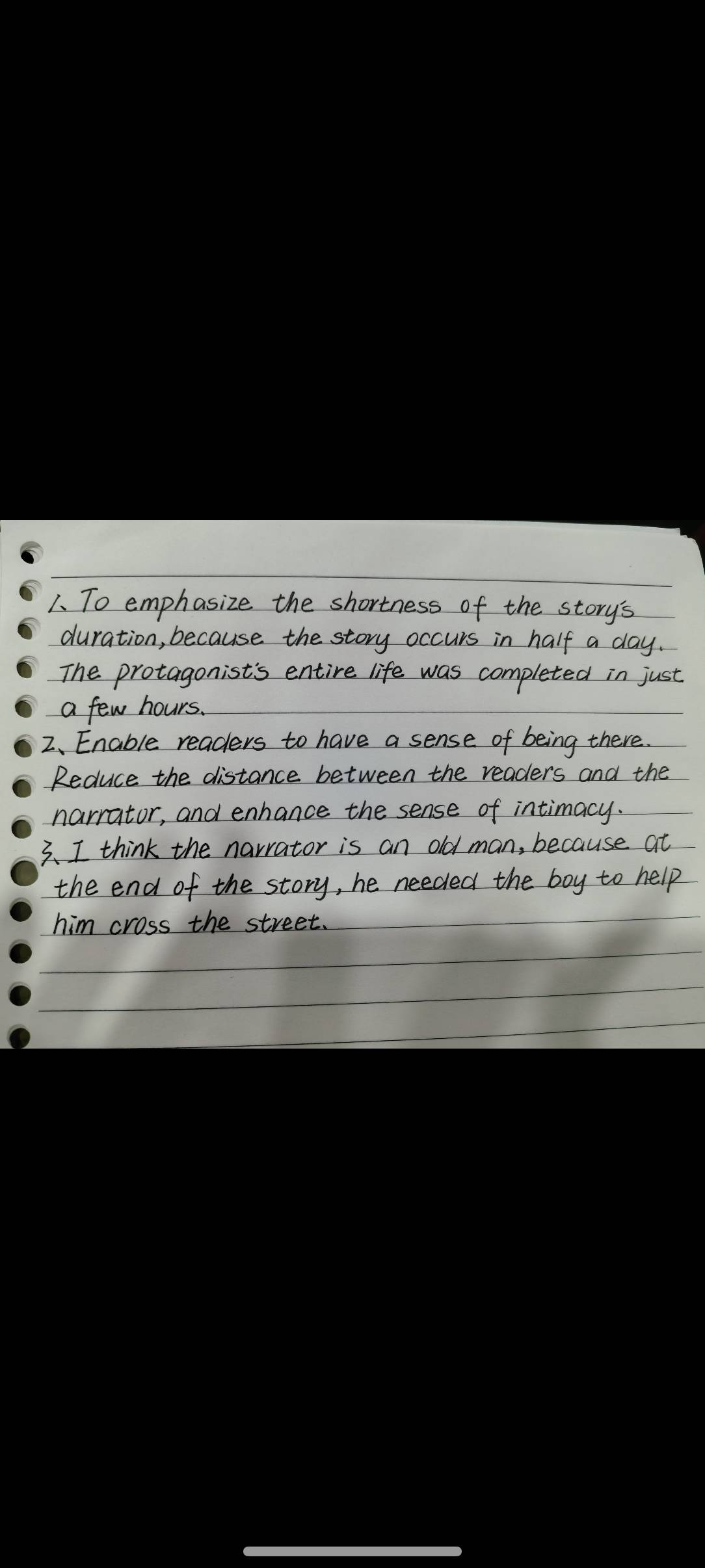
1. The title "Half a Day" demonstrates the brevity of life. Within the framework of just "half a day", the author experiences the stages from childhood to adulthood and then to old age, which reinforces the theme that time flies in this short journey.
2. Telling the story in the first person can narrow the distance with readers and make them feel the protagonist’s inner feelings more deeply.
3. He is probably an old man.
The detail in the text that he needs the help of a young boy suggests that the author may have entered old age, recalling his childhood self and lamenting that he has grown old. -
1.“Half a Day”not only describes the time the prtagonist spends at school,but alo expresses the speed of the passage
of time, highlghting the passage of lfe.2.Make the story more immersive ,let readers be more immersed in the plot ,better feel the joys and sorrows of the pntagonist , and make the story develop more natural.
3.I think he is about 60-80 years old.Because he has described most of his life in the article,he should be relatively old and have enugh time to recall his life.
-
-
-
-
1.The title uses exaggeration, condensing the rapid passage of time and enormous changes into what seems to happen within half a day.
2.t allows readers to feel as if they are there and intimately experience the emotions the author wants to convey
3.It can be seen from the last sentence of the text that the author should be in his seventies or eighties.
-
添加回复

 您确定给 “0” 位老师发送协议吗?
UMOOCS用户服务协议
问题分类:
--
