【授课老师】
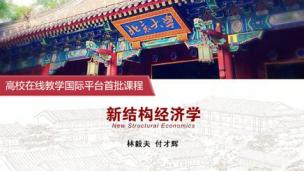
林毅夫 教授
Professor Justin Yifu Lin
林毅夫,北京大学新结构经济学研究院教授、院长,南南合作与发展学院院长,国家发展研究院名誉院长。林毅夫于 1986 年获得美国芝加哥大学经济学博士学位,荣膺英国科学院外籍院士、发展中国家科学院(原名第三世界科学院)院士,并获得法国奥佛涅大学、美国福特汉姆大学、英国诺丁汉大学、香港城市大学、英国伦敦经济学院和香港科技大学的荣誉博士学位。1994 年创立北京大学中国经济研究中心(现北京大学国家发展研究院),并担任主任一职。2008 年被任命为世界银行首席经济学家兼负责发展经济学的高级副行长,成为担此要职的发展中国家第一人,2012 年任满返回北大,继续教学研究工作。现任中国政协常委、经济委员会副主任,国务院参事,国家“十三五”、“十四五”规划专家委员会副主席、“一带一路”国际合作高峰论坛国际咨询委员会主席。著有二十余册新结构经济学著作,并在国内外学术期刊发表 100 多篇论文。
Professor Justin Yifu Lin is the dean of Peking University’s Institute of New Structural Economics, the dean of the Institute of South–South Cooperation and Development, and the honorary dean of the National School of Development. He received a Ph.D. in economics from the University of Chicago in 1986, and he has the honor of being a foreign member of the British Academy of Sciences and a member of the World Academy of Sciences. Lin has also received honorary doctorate degrees from Clermont Auvergne University, Fordham University, the University of Nottingham, the City University of Hong Kong, the London School of Economics and Political Science, and Hong Kong University of Science and Technology. In 1994, he established Peking University’s China Center for Economic Research (now the National School of Development at Peking University) and served as its director. In 2008, he was appointed as the World Bank’s chief economist and the senior vice president in charge of development economics, becoming the first person from a developing country to hold these positions. After his tenure expired in 2012, Lin returned to Peking University, where he continued his teaching and research activities He currently serves as a standing committee member of the CPPCC and is the deputy director of its Economic Committee. In addition, he is a counselor of the State Council, the vice chairman of the Expert Committee for the 13th and 14th five-year plans, and the chairman of the International Advisory Committee for the “Belt and Road” Forum for International Cooperation. Lin has authored more than 20 books on new structural economics and published more than 100 papers in domestic and foreign academic journals.
付才辉 研究员
Researcher Caihui Fu
付才辉,北京大学新结构经济学研究院研究员,教材课程与报告案例研发中心主任。2014年起协助林毅夫教授创办北京大学新结构经济学研究中心(现新结构经济学研究院),开展新结构经济学的学科建设与智库建设工作。 与林毅夫教授合著有首部新结构经济学教材《新结构经济学导论》与《解读世界经济发展》等多部新结构经济学学术著作。每年春季学期在北京大学开设“新结构经济学导论”公共课程、秋季学期在清华大学开设“新结构经济学分析”通识课程。
Caihui Fu is a researcher at Peking University’s Institute of New Structural Economics, and he is the director of the Research Center for Textbooks, Case Studies and Flagship Reports. Since 2014, he has been helping Professor Lin to establish Peking University’s Institute of New Structural Economics, develop the discipline and create think tank for the field. Along with Professor Lin, Fu co-authored the first textbooks on new structural economics, Introduction to New Structural Economics and Understanding World Economic Development, among many other academic texts on the theory. In addition, he leads a common required “Introduction to New Structural Economics” course every spring semester at Peking University. Likewise, he leads a core “New Structural Economics Analysis” course every fall semester at Tsinghua University.
你将了解孔子"先富后教"的思想如何启迪现代教育改革,促进教育公平;体会儒家"仁政"思想如何转化为以人民为中心的现代发展理念,改善14亿人民的生活;见证故宫文物、敦煌壁画实现数字化重生,古老神话通过创意叙事和中国动漫产业的实现飞跃引发全球共鸣;体验"和而不同"的哲学思想如何促进56个民族共生共荣;理解"天下大同"理想如何塑造人类命运共同体理念,通过"一带一路"等倡议推动全球协作。五个篇章诠释了中国式现代化的独特路径,展现了当代中国从深厚文化传统中汲取智慧,将永恒哲理与时代需求相融合,为全球对话与全人类的共同繁荣作出贡献。
【About This Course】
How does the Chinese civilization, which spans over five millennia draw upon its profound heritage to modernize on its own terms and offer insights for global development? This course unpacks this question through five engaging episodes centered on cultural confidence.
You will explore diverse dimensions where tradition converges with innovation:
- Education: Discover how the ancient philosophy of educating people after they are enriched informs modern educational reforms and promote equality.
- Governance: See how the Confucian concept of benevolent governance translates into the modern people-centered philosophy of development that improves the lives of 1.4 billion citizens of China.
- Cultural Preservation: Witness the digital rebirth of treasures from the Palace Museum to Dunhuang murals, and how ancient myths find new global resonance through creative storytelling and the quantum leap in China’s animation industry.
- Ethnic Harmony: Experience how the philosophy of "harmony without uniformity" enables 56 ethnic groups to thrive together, as seen in the communities of Lijiang in Yunnan province, Inner Mongolia Autonomous Region, and Xinjiang Uygur Autonomous Region.
- Global Vision: Understand how the enduring ideal of universal harmony shapes the modern vision of of building a community with a shared future for humanity, with endeavors like the Belt and Road Initiative fostering worldwide collaboration.
These narratives reveal a Chinese approach to modernity: one that is guided by and continues to draw vitality from its profound cultural legacy. It blends timeless wisdom with contemporary relevance to contribute to global dialogue and shared prosperity.
【课程特色】
1. 系统阐释中国式现代化,以叙事方式增强传播效能
2. 汇聚权威外语专家,构建高水平课程建设团队
3. 融入多元国际声音,增强课程亲和力与可信度
【Course Highlights】
1.Narrative-Driven Learning: Explains Chinese modernization systematically through engaging storytelling rather than dry theory.
2.Expert Team: Developed by a team of experienced language and culture experts.
3.Global Perspectives: Incorporates diverse international viewpoints to enhance relatability and credibility
【主讲教师】
段俊晖 上海商学院
【Instructor】
Duan Junhui, Shanghai Business School







 您确定给 “0” 位老师发送协议吗?
