【课程简介】
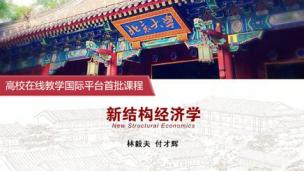
本课程以通识课的风格系统介绍新结构经济学的纲领、原理与方法,主要内容包括新结构经济学的结构范式革命、理论体系及其实践应用,分为“新结构经济学总纲”与“新结构经济学导论”两大部分,共包含23讲。新结构经济学总纲部分讲授新结构经济学对新古典经济学的结构革命;新结构经济学导论部分讲授的具体内容包括:中国与世界的经济简史及其经济结构安排多样性与经济系统复杂性概览,经济思想简史与新结构经济学的来龙去脉,新结构经济学基本原理与新结构经济学各子领域。
This course offers a systematic presentation of the principles, theories and methods of new structural economics in the style of a general education course. It will mainly cover the structural paradigm revolution about new structural economics, as well as its theoretical systems and its practical applications. The course is divided into two sections and 23 lectures (three lectures in General Principles of New Structural Economics and 20 lectures in Introduction to New Structural Economics).
This course will teach, in part, about this paradigm revolution to neoclassical economics; the specific content of this introduction to new structural economics will include (1) a brief overview of the economic histories of China and the world, as well as the diversity of their economic structures, and the complexity of economic systems, (2) a brief history of economic theories and the origins and development of new structural economics, and (3) the basic principles of new structural economics and the discipline’s sub-fields.
【授课老师】
林毅夫 教授
Professor Justin Yifu Lin
林毅夫,北京大学新结构经济学研究院教授、院长,南南合作与发展学院院长,国家发展研究院名誉院长。林毅夫于 1986 年获得美国芝加哥大学经济学博士学位,荣膺英国科学院外籍院士、发展中国家科学院(原名第三世界科学院)院士,并获得法国奥佛涅大学、美国福特汉姆大学、英国诺丁汉大学、香港城市大学、英国伦敦经济学院和香港科技大学的荣誉博士学位。1994 年创立北京大学中国经济研究中心(现北京大学国家发展研究院),并担任主任一职。2008 年被任命为世界银行首席经济学家兼负责发展经济学的高级副行长,成为担此要职的发展中国家第一人,2012 年任满返回北大,继续教学研究工作。现任中国政协常委、经济委员会副主任,国务院参事,国家“十三五”、“十四五”规划专家委员会副主席、“一带一路”国际合作高峰论坛国际咨询委员会主席。著有二十余册新结构经济学著作,并在国内外学术期刊发表 100 多篇论文。
Professor Justin Yifu Lin is the dean of Peking University’s Institute of New Structural Economics, the dean of the Institute of South–South Cooperation and Development, and the honorary dean of the National School of Development. He received a Ph.D. in economics from the University of Chicago in 1986, and he has the honor of being a foreign member of the British Academy of Sciences and a member of the World Academy of Sciences. Lin has also received honorary doctorate degrees from Clermont Auvergne University, Fordham University, the University of Nottingham, the City University of Hong Kong, the London School of Economics and Political Science, and Hong Kong University of Science and Technology. In 1994, he established Peking University’s China Center for Economic Research (now the National School of Development at Peking University) and served as its director. In 2008, he was appointed as the World Bank’s chief economist and the senior vice president in charge of development economics, becoming the first person from a developing country to hold these positions. After his tenure expired in 2012, Lin returned to Peking University, where he continued his teaching and research activities He currently serves as a standing committee member of the CPPCC and is the deputy director of its Economic Committee. In addition, he is a counselor of the State Council, the vice chairman of the Expert Committee for the 13th and 14th five-year plans, and the chairman of the International Advisory Committee for the “Belt and Road” Forum for International Cooperation. Lin has authored more than 20 books on new structural economics and published more than 100 papers in domestic and foreign academic journals.
付才辉 研究员
Researcher Caihui Fu
付才辉,北京大学新结构经济学研究院研究员,教材课程与报告案例研发中心主任。2014年起协助林毅夫教授创办北京大学新结构经济学研究中心(现新结构经济学研究院),开展新结构经济学的学科建设与智库建设工作。 与林毅夫教授合著有首部新结构经济学教材《新结构经济学导论》与《解读世界经济发展》等多部新结构经济学学术著作。每年春季学期在北京大学开设“新结构经济学导论”公共课程、秋季学期在清华大学开设“新结构经济学分析”通识课程。
Caihui Fu is a researcher at Peking University’s Institute of New Structural Economics, and he is the director of the Research Center for Textbooks, Case Studies and Flagship Reports. Since 2014, he has been helping Professor Lin to establish Peking University’s Institute of New Structural Economics, develop the discipline and create think tank for the field. Along with Professor Lin, Fu co-authored the first textbooks on new structural economics, Introduction to New Structural Economics and Understanding World Economic Development, among many other academic texts on the theory. In addition, he leads a common required “Introduction to New Structural Economics” course every spring semester at Peking University. Likewise, he leads a core “New Structural Economics Analysis” course every fall semester at Tsinghua University.
【课程简介】
本课程围绕新质生产力的核心内涵,深入解读新智联、新智造、新能源、新材料、新海空五大核心领域的创新实践路径。您将通过杭州城市大脑系统,看到新智联的突破,感受其融合5G、AIoT与大数据实现城市治理数字化升级的民生价值;借助比亚迪新能源汽车产业链,了解新智造的发展,见证中国从“制造大国”向“制造强国”的转型历程;走进库布其沙漠光伏治沙项目,体悟新能源的实践,领略“板上发电、板下治沙”模式实现生态与经济双赢的绿色力量;认识以国产大飞机C919关键材料自主攻关为代表的新材料突破,明确高端材料自主可控对制造强国建设的战略意义;感受以中国北斗卫星导航系统为代表的新海空探索,见证航天科技赋能全球发展的时代图景。这些实践生动展现了新质生产力的丰富内涵与实施路径,彰显了中国以科技创新驱动发展转型、以新质生产力赋能中国式现代化、全面推进中华民族伟大复兴的宏伟目标。
【About This Course】
This course centers on the core connotations of new quality productive forces, offering an in-depth exploration of the innovative pathways within five key domains: new intelligent connectivity, new smart manufacturing, new energy, new materials, and new frontiers of sea, air, and space.
You will explore breakthroughs in new intelligent connectivity through the case of Hangzhou’s City Brain system, and appreciate its value for people’s livelihoods as it integrates 5G, AIoT, and big data to achieve a comprehensive digital upgrade of urban governance.
You will examine the development of new smart manufacturing represented by BYD’s new energy vehicle industrial chain, witnessing the qualitative leap of China’s manufacturing industryfrom “big” to “strong.”
You will gain insight into new energy practices typified by the Kubuqi Desert photovoltaic desert control project and understand the model of “power generation above and ecological restoration below,” which achieves both ecological and economic benefits.
You will understand breakthroughs in new materials represented by China’s domestically developed large passenger aircraft C919, clarifying the strategic significance of self-reliance in high-end materials for building a strong manufacturing nation.
You will engage with explorations in the new frontiers of sea, air, and space exemplified by China’s BeiDou Navigation Satellite System, witnessing the contemporary landscape in which aerospace technologies empower global development.
Together, these practices vividly demonstrate the rich connotations and implementation pathways of new quality productive forces, highlighting China’s overarching goals of driving development transformation through scientific and technological innovation, empowering Chinese modernization with new quality productive forces, and comprehensively advancing the great rejuvenation of the Chinese nation.
【课程特色】
1. 系统阐释中国式现代化,以叙事方式增强传播效能
2. 汇聚权威外语专家,构建高水平课程建设团队
3. 融入多元国际声音,增强课程亲和力与可信度
【Course Highlights】
1. Narrative-Driven Learning: Explains Chinese modernization systematically through engaging storytelling rather than dry theory.
2. Expert Team: Developed by a team of experienced language and culture experts.
3. Global Perspectives: Incorporates diverse international viewpoints to enhance relatability and credibility.
【主讲教师】
张钫炜 北京邮电大学
【Instructor】
Zhang Fangwei, Beijing University of Posts and Telecommunications








 您确定给 “0” 位老师发送协议吗?
